Capture a reproducible incident
Write down the timestamp and timezone, calling and called identities, direction, devices and exact symptom. Identify whether the problem affects one endpoint, one site, one destination or every call. Those boundaries guide the next check.
Choose the right branch
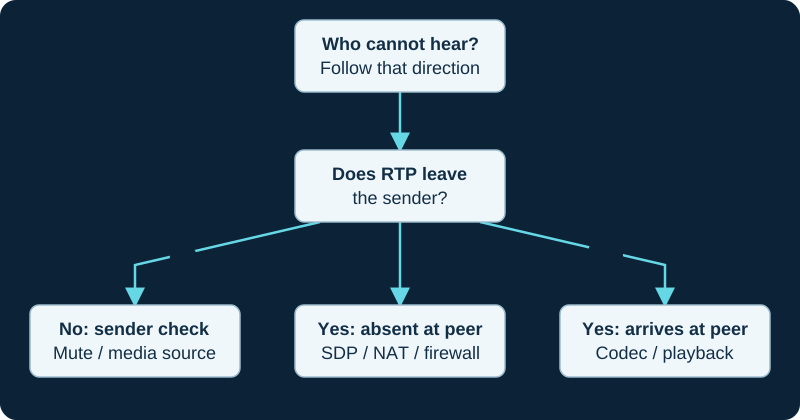
A phone that cannot register needs an identity and reachability investigation. A phone that registers but cannot call needs request, permission and routing checks. A call that connects with missing or distorted sound needs a media-path investigation. A call reaching the wrong person needs destination and schedule review.
Start with a known-working internal call if possible, then change one variable: endpoint, site or destination. Do not change NAT, codecs and dialplan simultaneously. You need to know which change affected the result.
Preserve evidence safely
Use read-only status information and a narrowly scoped trace first. Logs and captures can contain credentials, identities and conversation content. Restrict access, redact shared extracts and remove temporary diagnostic logging when the investigation ends.
After a repair, repeat the failed scenario and a small set of surrounding workflows. Successful registration alone is not enough: verify two-way audio, hangup and any transfer behavior involved in the original report.
Sources & applicability
Primary references for the technical details above. Operational examples and planning checklists are VoIP.info editorial guidance.