Identify the digits FreePBX receives
A phone may transform digits before sending the call. Record the entered number and the number observed at the PBX. Compare a working destination and another extension to identify whether the problem follows the route or the device.
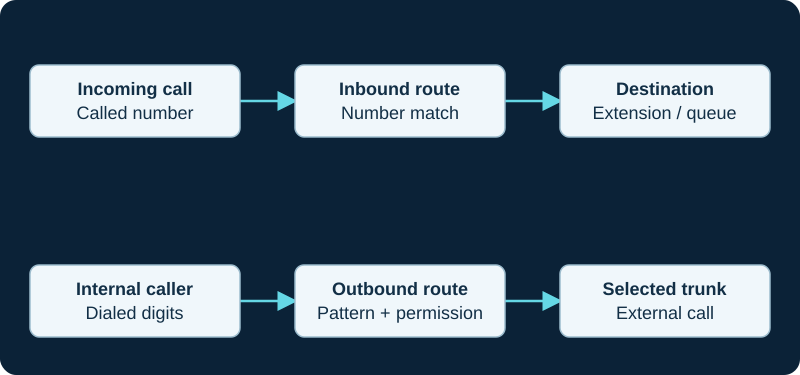
A working outbound call does not prove inbound number routing. Diagnose the direction and the matching rule independently.
Inspect matching and order
Review the outbound routes in priority order, their dial patterns and any prefix removal or prepending. Write the transformation with one concrete example. A broad earlier route may intercept a number intended for a later one.
Check the permitted calling policy and chosen trunk sequence. A configured trunk that is never selected will not be fixed by changing its password.
Inspect the next boundary
If FreePBX sends the expected number toward the carrier, interpret the response there. Account restrictions, authorized caller identity and destination policy can reject a properly matched local route. Record the carrier-side call identifier for support.
Validate and constrain
Submit and apply the justified change, then test allowed and disallowed destinations. Verify the selected trunk rather than merely hearing ringback. Keep emergency-service routing and carrier validation under their dedicated procedures, and retain a rollback copy of the route ordering.
Sources & applicability
Primary references for the technical details above. Operational examples and planning checklists are VoIP.info editorial guidance.
- IETF RFC 3261 — SIP, including linked updates ↗
- IETF RFC 3550 — RTP and RTCP ↗
- Asterisk res_pjsip configuration ↗
Examples require adaptation to your topology. No live PBX or hardware testing is claimed.