VoIP.info Knowledge library

Learn VoIP

Understand business calling, explore self-hosted systems and build the knowledge to diagnose your own network.

Reviewed 2026-09-07Foundational

Start here

Understand the moving parts before choosing a system.

PBX & self-hosting

Build an operating plan, then follow the platform-specific guides.

SIP & communications infrastructure

Understand call signaling, trunks and service architecture.

Networking

Plan the path for voice traffic and investigate network conditions.

Diagnostics & troubleshooting

Start with a symptom and collect evidence that narrows the cause.

Endpoints & provisioning

Research phones, deployment methods and legacy interfaces.

Security

Control access, call permissions and recovery.

Business calling & workflows

Design routing, administration and everyday calling around the team.

Watch & tools

Pair written guidance with video explanations and editable planning tools.

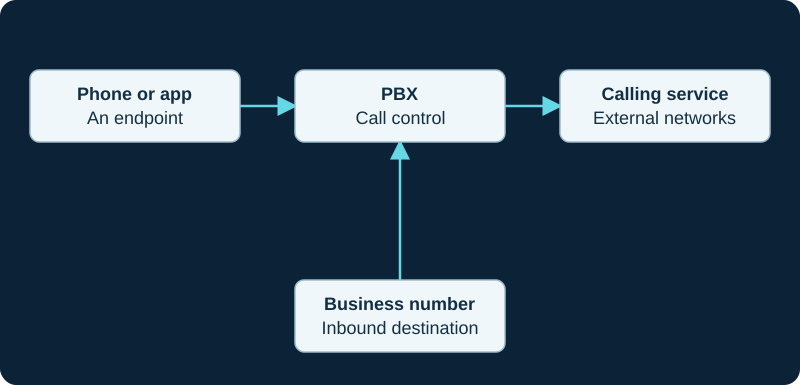
The parts of a VoIP system
A phone or app sends calls to a PBX, which connects through a trunk or service to other networks. A phone number routes incoming calls to PBX destinations.

A simplified logical view. A hosted service may combine PBX and carrier functions; actual signaling and media paths can differ.

Video guides

See the concepts in a packet capture or an administration walkthrough.

Explore Watch →

Choose a starting point

If you are planning a business phone system, begin with the fundamentals below. Learn how extensions, public numbers and simultaneous capacity fit together, then decide who should operate the platform. The right outcome can be hosted service or a system you administer yourself.

For technical work, follow the PBX Lab path and distinguish call signaling from audio delivery. A phone that rings is evidence that part of a call succeeded; it is not evidence that the media path is correct.

A library organized around real work

The guides connect concepts to operating decisions: what to buy, what to configure, what to measure and what to check when a call fails. Follow related guides to move between business requirements and technical detail. Existing provider research, comparison and business calculators remain available.

Evidence you can inspect

Technical pages cite primary standards, project documentation or manufacturer material. Software-specific content shows its intended baseline. Documentation-based examples are not described as hands-on tests. Treat local acceptance testing as a separate step before carrying business calls.

Sources & applicability

Primary references for the technical details above. Operational examples and planning checklists are VoIP.info editorial guidance.