A phone service built from several parts
VoIP means voice over Internet Protocol. A microphone captures speech, a codec represents it digitally, and a device sends it in packets across an IP network. The receiving device reconstructs those packets as sound. Calls can stay inside a private network; the public internet is not a requirement for every VoIP call.
A business deployment normally also needs call control, user identities and routing. Those functions might live in a hosted provider's platform or in a PBX you administer. A SIP trunk connects a suitable PBX to a carrier for outside calling. Buying a handset alone does not create telephone service.
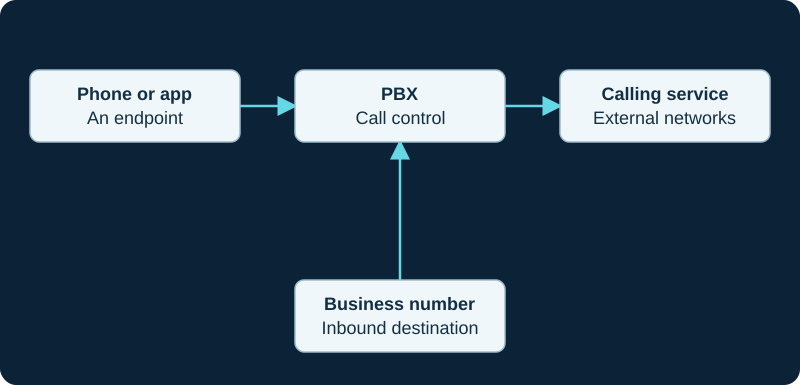
A simplified logical view. A hosted service may combine PBX and carrier functions; actual signaling and media paths can differ.
What your business needs to decide
Start with the calls people handle. A reception desk needs a different workflow from a warehouse employee carrying a cordless handset. Write down who answers the main number, where unanswered calls go, whether staff work remotely and what should happen outside business hours.
Then assign responsibility for the network, phone provisioning, billing and incident response. Hosted service moves much of the platform administration to the supplier, while the business still owns local connectivity, user access and many device decisions.
What changes during an outage
A functioning handset depends on power and a usable path to the call-control system. A UPS can keep local equipment powered but cannot repair an upstream carrier outage. A mobile fallback needs an independent connection and a documented forwarding arrangement.
Before moving the main number, test internal calls, incoming calls, outgoing calls, transfers and voicemail. Confirm location and emergency-service arrangements directly with the carrier through its approved test process. Do not infer emergency capability from an ordinary successful call.
Your next step
Draw a simple inventory: users, telephone numbers, devices, sites and critical call paths. Use it to decide whether self-hosting fits your operating capacity or whether hosted service is a better match.
Sources & applicability
Primary references for the technical details above. Operational examples and planning checklists are VoIP.info editorial guidance.