The call-control layer
A private branch exchange coordinates calls for an organization. It connects extensions, routes outside calls and applies business behavior such as voicemail, queues and opening hours. Modern PBXs are often software systems; the physical server is only one way to host that software.
Keep the PBX separate from the carrier in your planning. A self-managed PBX does not automatically include public telephone numbers or an outbound calling account. Equally, a carrier account does not automatically supply the internal workflows your staff need.
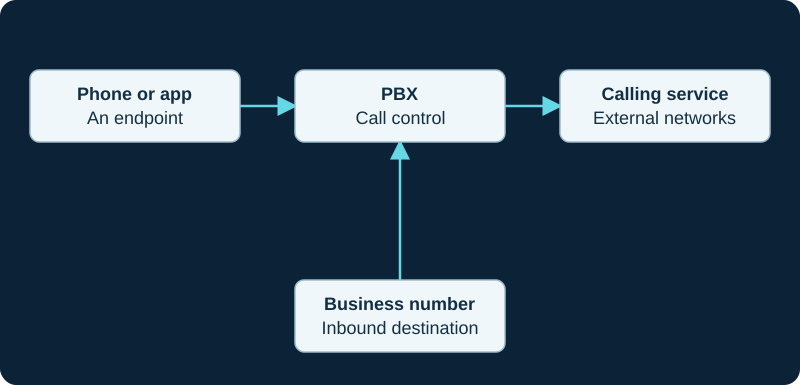
A simplified logical view. A hosted service may combine PBX and carrier functions; actual signaling and media paths can differ.
Extensions are not outside lines
An extension is an internal identity or destination. A direct inward dialing number is an outside number a carrier delivers to your system. Concurrent-call capacity describes how many calls can be carried at the same time. These are different dimensions, and a quote that lists only user count leaves important questions unanswered.
For example, a twelve-person office can share a main number while each person has an extension. Its required outside-call capacity depends on actual simultaneous use, not simply on twelve devices being registered. Transfers, forwarding and conference arrangements can consume additional carrier or PBX resources.
Put the workflow on paper
Trace four cases: a normal incoming call, an unanswered call, an after-hours call and an outgoing call. Identify the destination, timeout, announcement and final fallback for each. Confirm who can change these rules and who reviews them after staffing changes.
An overly elaborate menu can make a small company harder to reach. Start with the minimum routing that reliably gets a caller to a person or an informative voicemail box.
Choose an administration model
FreePBX provides a management layer around Asterisk for common PBX tasks. Direct Asterisk configuration offers programming flexibility but requires more explicit control of files, routing and operations. A hosted system can remove much of the infrastructure workload. Evaluate recovery and day-to-day administration alongside features.
Sources & applicability
Primary references for the technical details above. Operational examples and planning checklists are VoIP.info editorial guidance.