A management layer with operating responsibilities
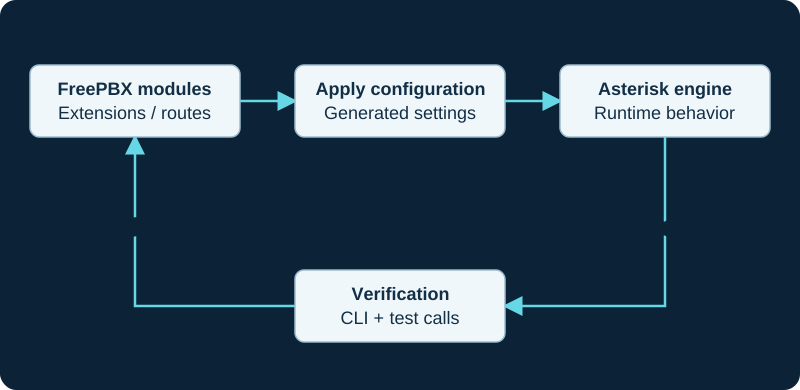
FreePBX provides a graphical administration environment for an Asterisk-based phone system. It organizes common tasks such as extension creation, trunks and call destinations. The interface can reduce direct file editing, but reliable service still depends on networking, permissions, updates and recovery.
Use the right baseline
This library targets FreePBX 17 on Debian 12. Follow the official installer and its supported Asterisk selection. Do not adapt a CentOS-era installation guide by changing only the version name, and do not assume that every newer Debian release is supported by the same procedure.
Treat the published installation minimum as a way to start the software, not a guarantee of call capacity. Recording, transcoding, queues and other workloads need explicit planning and local validation.
Separate setup from production activation
Begin with an isolated deployment, two extensions and internal calls. Confirm routing and media before connecting outside service. Back up configuration before substantive changes, and prove that a backup can be restored away from production.
Understand the difference between submitting a form and applying configuration. Record which settings your installed modules generate. Standalone Asterisk snippets are explanatory references, not instructions to overwrite FreePBX-managed files.
Watch the explanation
Follow the chain from an Endpoint Manager template to an extension/MAC mapping and a redirect service that tells the phone where to fetch its configuration. Firmware slots and model-specific templates make the demonstration especially useful beside the existing manual-registration lesson. The aim is to understand provisioning ownership and scope before automating changes across many phones.
Read applicability and editorial notes →Watch this video here
FreePBX 101 v15, part 12, using a Sangoma S500. Menus, portal workflows, supported devices and licensing belong to that version. Review used the available transcript and primary references; audio and screen readability remain unverified.

The player loads only when you choose Watch here. Playback uses YouTube’s privacy-enhanced embed; YouTube processes playback data.
Sources & applicability
Primary references for the technical details above. Operational examples and planning checklists are VoIP.info editorial guidance.