Define what recovery must restore
Configuration, voicemail, recordings, certificates and custom files can have different owners and backup behavior. Inventory the installed modules and customizations, then compare that inventory with the Backup and Restore job scope. Do not assume every file on the server is automatically included.
The modern backup system works with module-owned data, with storage handled through Filestore. Cross-version support does not guarantee that every old module, license or external integration will work unchanged on a new platform.
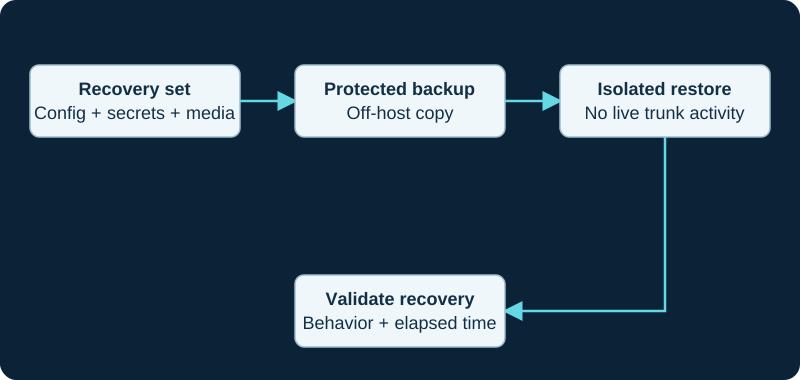
Keep production trunk identities from registering during a restore exercise. Include the dependencies needed to decrypt and use the backup.
Create and inspect a job
Configure an appropriate off-host storage destination with restricted credentials. Create a backup job selecting the needed modules and additional supported content. Run it manually once, inspect the completion log and confirm the artifact exists at the destination.
Set a schedule aligned with how much configuration loss the business can tolerate. Protect backup contents and their encryption or access keys. A backup inaccessible to the recovery operator can be as unhelpful as a missing backup.
Restore in isolation
Build a separate supported target and keep it from registering production trunks or serving real phones during the exercise. Restore through the documented workflow, inspect errors and verify users, routes and selected content. Handle licensing and external dependencies according to their own procedures.
Use internal test endpoints and a bounded call matrix. Confirm that restored secrets and certificates are handled appropriately rather than exposing them in screenshots or logs.
Record the limits
Write down restore duration, missing items and manual steps. Compare the result with the required recovery time and acceptable data loss. Keep carrier failover and network recovery in the same continuity plan: restoring FreePBX alone may not restore the entire calling service.
Sources & applicability
Primary references for the technical details above. Operational examples and planning checklists are VoIP.info editorial guidance.
Examples require adaptation to your topology. No live PBX or hardware testing is claimed.