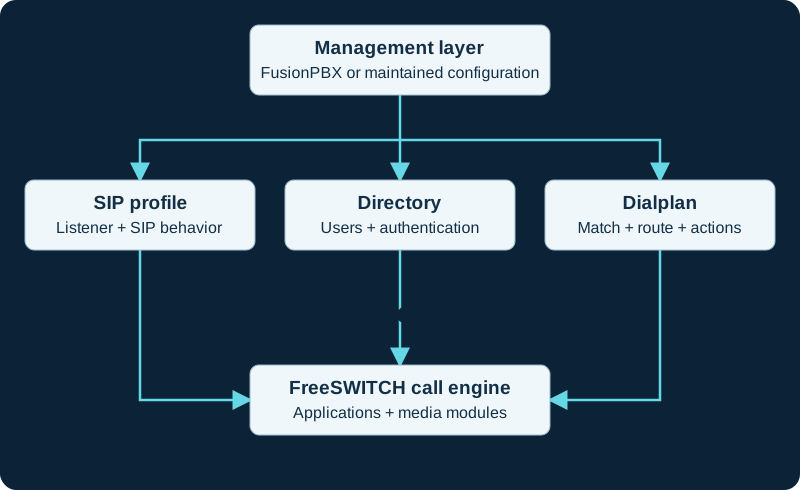
Engine and interface have different jobs
FusionPBX provides a web management interface and application configuration around FreeSWITCH. It manages business phone features, users, devices and domains; FreeSWITCH handles the underlying communications runtime. A FusionPBX configuration problem may therefore need both application-level inspection and FreeSWITCH evidence. The project supports multi-tenant administration. Tenant boundaries must be reflected in identity, routing, permissions and data access, not merely in a domain selector on a dashboard.
Version and installation reference
The official release listing reviewed September 7, 2026 identifies the 5.5 series, with tag 5.5.7 shown as latest. The current quick-install documentation assumes minimal Debian 12. Record the actual FusionPBX revision and installed FreeSWITCH version because an installer can select packages independently of the web application's release label. Start with installation and architecture, then extensions and tenant domains. Gateways and destinations explain the inbound and outbound routing relationship.
Compare with FreePBX by workflow
FreePBX administers Asterisk; FusionPBX administers FreeSWITCH. Compare provisioning, tenant administration, call features, integrations and recovery practices according to the deployment's needs. Neither interface removes the need to understand its engine's routing and media model. Pilot the actual business workflow and verify isolation between test tenants where relevant. Keep version-specific screenshots and observed results for later hands-on validation; these foundation guides do not claim lab testing.
Sources & applicability
Primary references for the technical details above. Operational examples and planning checklists are VoIP.info editorial guidance.
Examples require adaptation to your topology. No live PBX or hardware testing is claimed.