A programmable communications engine
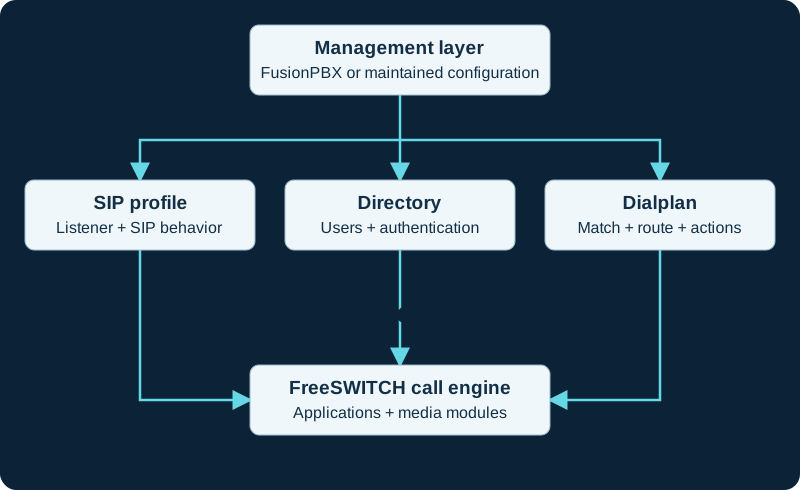
FreeSWITCH handles real-time communications through a modular engine. Its endpoint modules, channel state, dialplan applications and media capabilities can support a PBX, conference service or custom calling application. A typical two-party call has two channels joined by a bridge. Understand the configuration domains before copying examples: the directory describes users, the dialplan decides call behavior and module configuration controls the runtime services. A SIP profile is another important boundary, defining a Sofia SIP interface and its policies.
Use the current reference deliberately
The upstream release listing reviewed on September 7, 2026 marks 1.11.3 as latest and identifies security and stability fixes. It also notes that Debian 11 support was dropped. Older 1.10 installation videos can explain concepts while using package and module assumptions that need rechecking. Begin with installation planning, then SIP profiles and gateways. Read XML dialplan behavior before adding routes, and media modes before changing where RTP flows.
Choose an administration model
You can operate FreeSWITCH directly or use a management application such as FusionPBX. When a management layer generates configuration, make changes through its supported ownership model. Direct edits can be overwritten or conflict with the application's stored state. For a pilot, define two test identities, a restricted route and a clear media path. Record the actual software versions and observed calls. These guides are documentation-based; no hands-on interoperability result is implied by selecting a reference release.
Sources & applicability
Primary references for the technical details above. Operational examples and planning checklists are VoIP.info editorial guidance.
Examples require adaptation to your topology. No live PBX or hardware testing is claimed.