They occupy different layers
Asterisk is the telephony engine. FreePBX provides a management environment that configures an Asterisk-based system and its PBX features. Choosing FreePBX does not mean choosing a competing signaling engine; it changes how you administer and extend the installation.
For a small business with conventional extension and call-routing needs, a graphical management workflow can make routine changes easier to delegate. For a custom telephony application, direct Asterisk control can offer a more natural programming model. The choice should follow operating skills and required behavior.
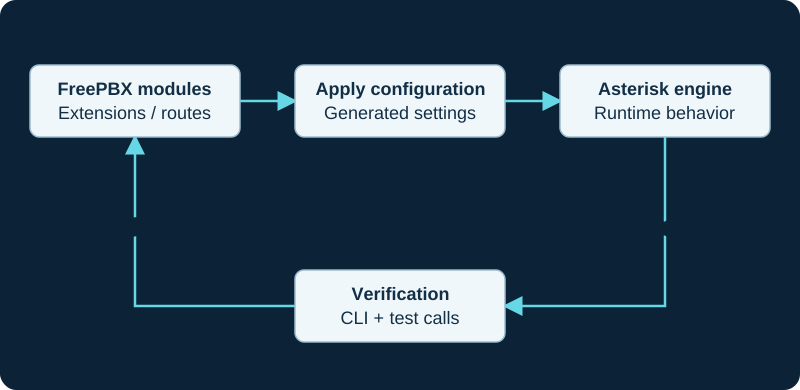
Use supported FreePBX controls and extension points. Direct edits to generated files can be replaced by the next configuration application.
Consider who maintains the result
Ask whether a second administrator can understand the configuration, recover a backup and safely change a route. A custom dialplan is maintainable when its structure and permissions are documented. A GUI is maintainable when module versions, customizations and external dependencies are also understood.
FreePBX-generated configuration has an owner: the application. Editing generated files can produce changes that disappear later. Use documented extension mechanisms for custom behavior, and record where that customization enters the generated call flow.
Compare the full package
Review module availability, licensing where applicable, update paths, device provisioning and support. Do not assume every capability shown in a commercial PBX product is included in an unlicensed FreePBX installation. Conversely, do not purchase add-ons without identifying a real workflow they solve.
Keep baselines distinct
Standalone tutorials here use Asterisk 22 LTS. FreePBX instructions use FreePBX 17 on Debian 12 and the supported installer-selected Asterisk environment. Do not force a standalone upgrade into a managed installation because a guide uses a different engine version. Test the full module and platform combination before migration.
Sources & applicability
Primary references for the technical details above. Operational examples and planning checklists are VoIP.info editorial guidance.
Examples require adaptation to your topology. No live PBX or hardware testing is claimed.