Begin with callers and staff
Write down why people call and who should answer. Separate sales, dispatch, support and internal conversations where their requirements differ. Record operating hours, peak periods, remote workers and the handling of callers who cannot reach anyone.
A useful brief describes observable outcomes: a dispatcher can transfer a call while retaining caller context; an unanswered main-number call reaches a staffed queue or an informative mailbox. A list of feature names alone does not show whether a proposed system meets those needs.
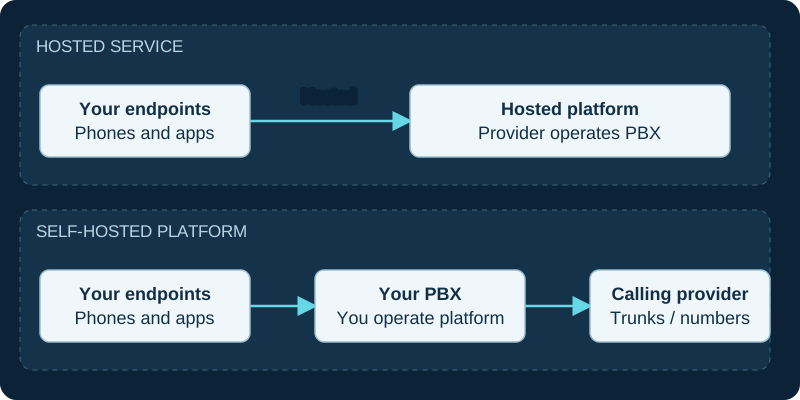
Operating responsibility changes. Both approaches still need endpoint, network and continuity planning.
Build a requirement register
- Users and locations: include shared-area devices and seasonal staff.
- Numbers: identify ownership, current carrier and any porting dependencies.
- Devices: desk phones, mobile applications, headsets and cordless coverage.
- Call behavior: opening hours, transfers, queue overflow and voicemail ownership.
- Operations: administrative access, support escalation and recovery responsibility.
Prioritize each item as essential, useful or unnecessary. Capture a small acceptance test for every essential behavior. Ask vendors to demonstrate those tests using the proposed plan and hardware.
Design continuity before cutover
List the power and connectivity dependencies at each site. Decide whether incoming calls can move to a carrier-side fallback if the PBX is unreachable. Confirm how staff communicate during an outage when the phone system itself cannot be used for coordination.
Keep the old service available until the new workflow and number transition are understood. Coordinate porting with the gaining provider and avoid cancelling the old account prematurely. Numbers attached to alarm, fax or other special services need separate investigation.
Review total effort
Compare recurring charges with setup, training, support and administration. Include the time needed to maintain accurate user access and call routing. Use the hosted versus self-hosted decision guide to assign platform responsibility. Recheck the design after a busy period rather than treating launch day as proof of long-term capacity.
Sources & applicability
Primary references for the technical details above. Operational examples and planning checklists are VoIP.info editorial guidance.