Make the installation identifiable
Record the host name, software versions, network address, time zone and administrative owner. Confirm the browser is connecting to the intended system through a trusted management path. Use a unique administrator credential and maintain a documented recovery route for access.
Review dashboard notifications and installer logs before dismissing them. Separate a licensing prompt for an optional capability from an actual failure of a required service.
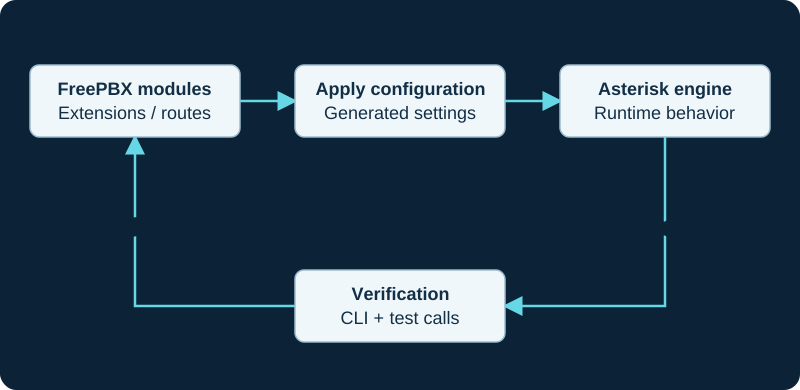
Use supported FreePBX controls and extension points. Direct edits to generated files can be replaced by the next configuration application.
Establish the network assumptions
Confirm name resolution and time synchronization. Document how local and remote phones will reach the PBX and which interface is used for carrier traffic. A server moved from an office network to a VPS needs a new topology review, not just a new address on the phones.
Keep management access restricted. Plan signaling and media policy separately, using the actual configured ports and carrier requirements.
Build a minimal internal system
Create two PJSIP extensions with individual secrets, submit and apply configuration, then provision two endpoints. Test each direction and verify audio, hangup and recovery after a handset restart. Do not attach a paid trunk as a workaround for an internal test that is not understood.
If a call fails, record whether it was rejected, unanswered or connected without sound. Those outcomes lead to different investigations.
Establish the first recovery point
Configure off-host backup storage and run a backup. Save the deployment notes alongside the recovery procedure, without exposing secrets in shared documentation. Only after this baseline is stable should you add incoming numbers, outbound permissions and more complex call handling.
Sources & applicability
Primary references for the technical details above. Operational examples and planning checklists are VoIP.info editorial guidance.
- Sangoma: FreePBX 17 installation ↗
- Sangoma: PJSIP extensions ↗
- Sangoma: Backup and Restore, version 15+ ↗
Examples require adaptation to your topology. No live PBX or hardware testing is claimed.