Separate audio from call flow
System Recordings stores named audio used by other modules. An Announcement chooses a recording and what happens after playback. This distinction allows the same office-hours message to be reused without duplicating the audio file.
Name recordings by purpose and revision, such as a dated holiday message. Keep a copy of the previous prompt. A clear script and a quiet recording environment usually help the caller more than background music or a long corporate introduction.
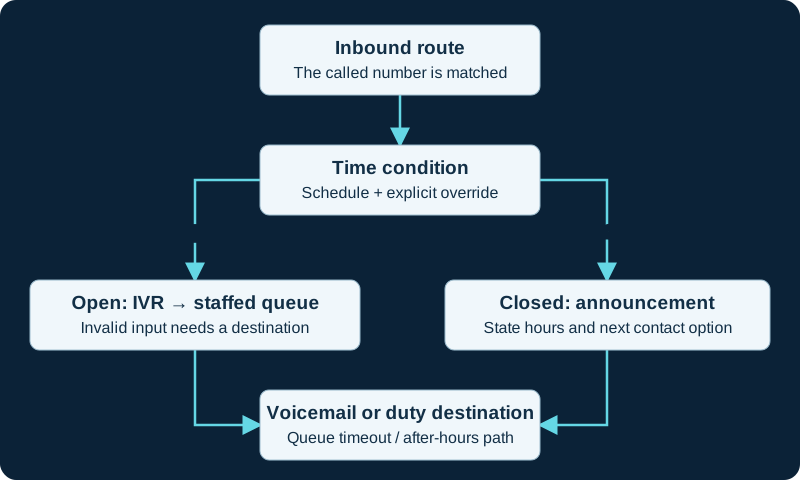
One routing design. Test holiday rules, manual overrides, invalid IVR input and queue overflow separately; the selected destinations depend on local policy.
Configure the next destination
Select the recording, decide whether callers may skip or repeat it, and choose the destination after playback. If Return to IVR is enabled and the call came from an IVR, that return behavior takes precedence over the ordinary configured destination.
An announcement is normally answered before playback. Using early media instead depends on carrier support and should be a deliberate interoperation choice. Do not assume that disabling answer makes the message audible to every external caller.
Test on an ordinary telephone
Listen from an external narrowband call, not only through computer speakers. Check clipping, silence at the start and whether the important information is understandable. Press the configured repeat key and try skipping; the script should accurately explain available controls.
Test entry from an IVR and from a direct route. If playback loops, draw the return destination and the next destination explicitly. A correct audio file cannot repair a circular route.
Replace safely
Upload a new named recording, test it, then switch the announcement. Check every module that shares the old recording before removing it. Use IVR guidance when callers should choose an action instead of simply hearing information.
Watch the explanation
Walks a complete inbound design through weather overrides, holidays, business hours and fallback destinations. Watch before building the individual modules.
Read applicability and editorial notes →Watch this video here
Part of a FreePBX 15 series, but this lesson teaches call-flow design rather than relying on the old interface. Review used the available transcript and primary references; audio and screen readability remain unverified.

The player loads only when you choose Watch here. Playback uses YouTube’s privacy-enhanced embed; YouTube processes playback data.
Explains the relationship between a system recording, an announcement and the next destination. The voicemail examples show how to avoid playing two greetings in succession.
Read applicability and editorial notes →Watch this video here
FreePBX 15 interface from 2021; the routing concept remains useful on the FreePBX 17 baseline. Review used the available transcript and primary references; audio and screen readability remain unverified.
The player loads only when you choose Watch here. Playback uses YouTube’s privacy-enhanced embed; YouTube processes playback data.
Sources & applicability
Primary references for the technical details above. Operational examples and planning checklists are VoIP.info editorial guidance.
Examples require adaptation to your topology. No live PBX or hardware testing is claimed.