Choose the object and change boundary
Bulk Handler imports and exports supported objects such as extensions, DIDs, users, groups and contacts. Its available types depend on installed modules. Treat an extension import and a user import as separate operations with different identifiers and permissions.
Prepare a change list stating which records are new, which existing values should change and which must remain untouched. Count each category before opening a spreadsheet. A full exported file is a snapshot of configuration, not permission to rewrite every row.
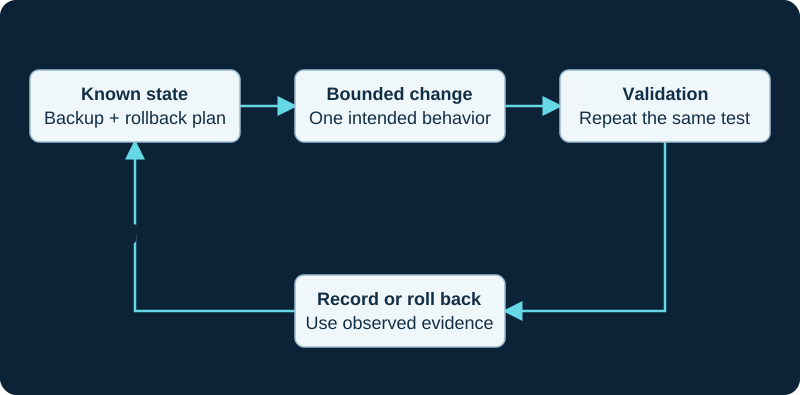
An example operational loop. Follow the supported reload or restart behavior for the affected component.
Export the schema from this PBX
Export the relevant object type from Admin → Bulk Handler and use that file as the starting schema. Read the required and recommended headers shown by the installed import screen. Old Bulk Extensions instructions are for a deprecated module; do not copy their columns into a current installation.
Keep an untouched export and a separate working copy. Treat extension numbers, DIDs and other identifiers as text so leading zeros and plus signs survive editing. Check the saved CSV in a text editor for unwanted number conversion, delimiters or quoting changes.
Protect secrets and blank fields
Exported or imported fields can contain SIP secrets, user passwords and voicemail PINs. Keep working files in a restricted location and remove unnecessary copies when the change is complete. Never include a populated CSV in a public support ticket.
A blank cell is not universally equivalent to “leave unchanged.” The documented schema gives explicit enable/disable and regeneration meanings to particular fields. Read the current field guidance and test the exact behavior on one disposable or approved test record. Do not regenerate production credentials accidentally.
Validate a deliberately small import
Use a tested backup and a maintenance window appropriate to the affected users. Import one representative record first. Review the validation screen, column mapping and the option controlling replacement or updates to existing data before proceeding. Stop if the preview does not match the written change list.
After applying the change through the supported workflow, inspect the record in its normal module. Register the test phone and exercise internal calling, outbound permissions and voicemail where those fields were involved. An accepted CSV proves parsing, not a working phone.
Reconcile before the next group
Export again and compare the intended fields and record counts with the pre-change snapshot. Check that unrelated records and sensitive values did not change. Record any rejected rows and resolve them individually before expanding the import.
If a batch partially succeeds, identify exactly which records were changed before retrying; blindly replaying the whole file can repeat side effects. Recover using the documented backup and restore process when a narrow correction cannot safely restore the intended configuration.
Sources & applicability
Primary references for the technical details above. Operational examples and planning checklists are VoIP.info editorial guidance.
Examples require adaptation to your topology. No live PBX or hardware testing is claimed.