Decide what the extension represents
An extension usually represents a person or shared device destination. Choose a numbering plan that leaves room for growth and avoids collisions with feature codes or other dialed destinations. Assign a clear display name and an owner responsible for voicemail and access.
In the Extensions module, choose a PJSIP extension for this modern baseline. Older documentation may mention chan_sip options that are not the intended path for FreePBX 17. Follow your installed module's interface rather than enabling legacy behavior to match an old screenshot.
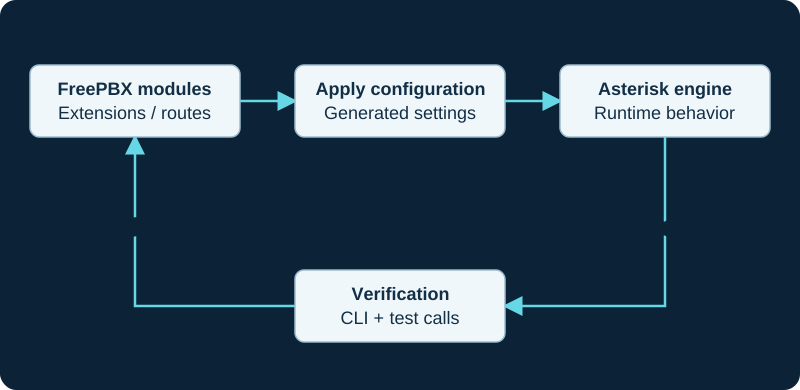
Use supported FreePBX controls and extension points. Direct edits to generated files can be replaced by the next configuration application.
Configure the identity deliberately
Enter the extension number and display name, then review the generated device secret and authentication settings. Use a unique strong secret and provision it only to the intended endpoint. Administrative login credentials are not handset registration credentials.
Enable voicemail only when a mailbox has an accountable owner and an access policy. Review caller-ID behavior and device options relevant to the actual use case. Avoid changing advanced values without a specific requirement.
Save and apply
Submit the extension and apply configuration through FreePBX. These are distinct steps in the documented workflow. Inspect the resulting state before provisioning many devices. A form saved successfully does not necessarily mean the engine has loaded the new extension.
Provision the phone with the reachable registrar, extension identity, authentication ID and device secret. Record the device and firmware associated with the account.
Accept and retire properly
Test internal calls in both directions, sound, hold, transfer and voicemail if enabled. Reboot the handset and verify recovery. When an employee leaves, revoke or rotate credentials, review forwarding and transfer mailbox ownership. Renaming an extension does not remove the previous user's access.
Watch the explanation
Maps an extension’s credentials to a phone account, then adds voicemail access and busy-lamp keys. Changing the default phone administration password is part of the walkthrough.
Read applicability and editorial notes →Watch this video here
FreePBX 15 and Yealink T58A in 2021. Use current firmware documentation for your exact model. Review used the available transcript and primary references; audio and screen readability remain unverified.

The player loads only when you choose Watch here. Playback uses YouTube’s privacy-enhanced embed; YouTube processes playback data.
Sources & applicability
Primary references for the technical details above. Operational examples and planning checklists are VoIP.info editorial guidance.
Examples require adaptation to your topology. No live PBX or hardware testing is claimed.