A signaling-focused building block
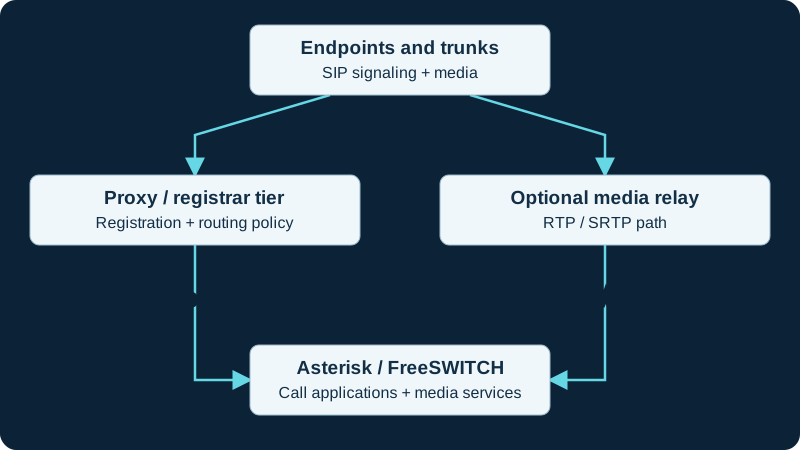
Kamailio is a modular SIP server used for routing, registration, presence and related communications infrastructure. It can front PBX or application servers, applying policy before calls reach those systems. It is not a drop-in graphical PBX administration interface. Begin by defining which component owns registration and which owns business call features. A Kamailio edge and an Asterisk or FreeSWITCH application tier can complement each other when their responsibilities are explicit.
Keep media separate
SIP proxying does not automatically relay RTP. Kamailio's rtpengine module controls a separate RTPengine service when the design needs media relay or adaptation. That relationship introduces its own capacity, availability and security boundary. Read registrar and application-tier architecture and scaling and high availability. These are advanced conceptual guides using the 6.0.x module reference; they are not a complete internet-facing configuration.
Define evidence before scaling
Record request rate, active registrations, concurrent dialogs and media throughput separately. A system that handles many OPTIONS requests may still fail a stateful transfer workflow or a registration storm after an outage. Test authorized and unauthorized calls, node loss, recovery and the behavior of established dialogs. Use the advanced SIP reference and diagnostics to identify the boundary you are measuring. Avoid describing redundancy as seamless until the actual call-state behavior has been observed.
Watch the explanation
Fred Posner explains how SIP routing, registration ownership and media services can be split across Kamailio, Asterisk and RTPengine. The discussion of backend probing and reconnect surges helps frame a larger deployment.
Read applicability and editorial notes →Watch this video here
AstriCon 2021 talk using Kamailio 5.5 examples. Treat it as an architecture lesson; our current written cluster uses 6.0 documentation. Review used the available transcript and primary references; audio and screen readability remain unverified.

The player loads only when you choose Watch here. Playback uses YouTube’s privacy-enhanced embed; YouTube processes playback data.
Sources & applicability
Primary references for the technical details above. Operational examples and planning checklists are VoIP.info editorial guidance.
Examples require adaptation to your topology. No live PBX or hardware testing is claimed.