Read the exchange, not an isolated number
SIP manages sessions through requests and responses. The meaning of a message depends on its method, transaction and position in the exchange. A successful REGISTER tells you something different from a successful INVITE. Authentication challenges can be normal steps rather than service failures.
Follow the call layers
Use SIP versus VoIP to separate the general service from the protocol. Use how VoIP works to separate signaling from media. Session descriptions communicate media parameters; they do not prove that the network can deliver packets to those addresses.
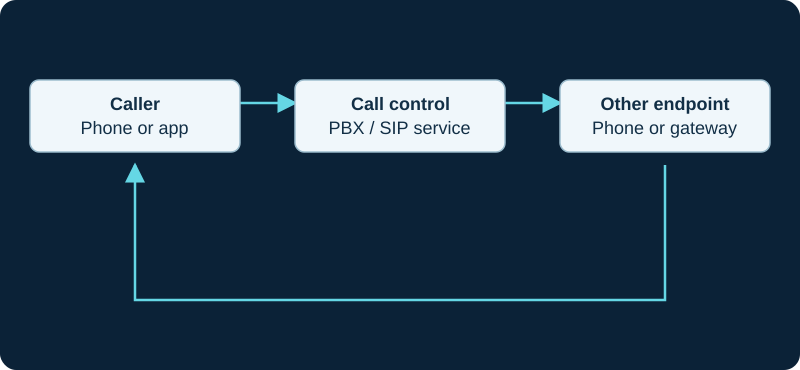
In a PBX deployment, the phone-facing leg and carrier-facing leg may have different identifiers and media negotiation. A response observed on one side may be generated or translated by an intermediary. Identify its source before assigning a root cause.
Standards and implementation context
RFC 3261 is the starting point for core SIP. Its linked updates matter for areas such as authentication, transport security and transaction behavior. Implementation documentation explains how a particular PBX maps that protocol into configuration.
When diagnosing, keep a timestamp, affected endpoints and a redacted trace. Avoid publishing complete captures containing phone numbers or audio. Reproduce one bounded call and follow its sequence before making configuration changes.
Sources & applicability
Primary references for the technical details above. Operational examples and planning checklists are VoIP.info editorial guidance.