They answer different questions
SIP defines signaling for creating, changing and ending sessions. WebRTC combines browser-facing APIs with real-time media and transport requirements. A browser softphone can use both: JavaScript exchanges SIP messages over a WebSocket while WebRTC establishes the media connection. An existing SIP desk phone does not become a browser peer merely because both sides use SDP. The media transport, security, ICE behavior and codecs must interoperate, often through a PBX or gateway.
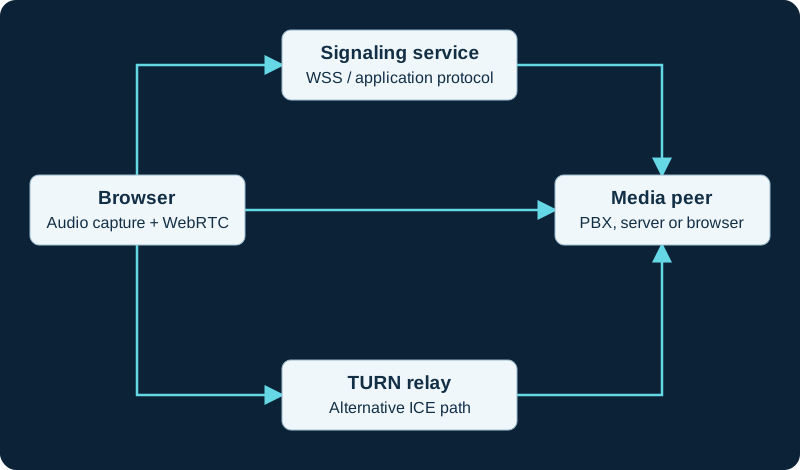
Logical connections, shown in one direction for clarity. Media and signaling are bidirectional. TURN relays encrypted packets; the negotiated media peer terminates DTLS-SRTP.
Choose the server boundary
For a business softphone, identify which system owns registration, dial permissions, transfers and PSTN access. If these already live in a SIP PBX, SIP over WebSocket may preserve that control model. For a custom collaboration application, a purpose-built signaling service may be more appropriate. The choice of signaling service does not remove the need for NAT traversal or secure media. A web reverse proxy that handles HTTPS and WSS may have no role in carrying RTP. Draw the media termination point explicitly before buying or configuring infrastructure.
Compare operational behavior
Use the same user journey to compare implementations: sign in, receive a call, hold, transfer, change headset and recover after a network change. Check incoming-call behavior when the browser is closed or the device sleeps; do not assume desk-phone availability semantics. For support, retain a call correlation identifier across the application, signaling server and PBX. Establish which team can inspect each layer. A clear ownership map is often more valuable than selecting a library based solely on whether its marketing mentions both SIP and WebRTC.
Watch the explanation
Answers one common question quickly: WebRTC does not choose your application signaling, and browser-based SIP uses a browser-compatible transport such as WebSocket.
Read applicability and editorial notes →Watch this video here
A conceptual explanation published in 2025; pair it with the SIP-over-WebSocket reference. Review used the available transcript and primary references; audio and screen readability remain unverified.

The player loads only when you choose Watch here. Playback uses YouTube’s privacy-enhanced embed; YouTube processes playback data.
Sources & applicability
Primary references for the technical details above. Operational examples and planning checklists are VoIP.info editorial guidance.
Examples require adaptation to your topology. No live PBX or hardware testing is claimed.