Recognize the two forms
G.711 commonly appears in SDP as PCMA for A-law and PCMU for mu-law. Both use a 64 kbit/s audio payload rate. They are distinct encodings, so a compatibility check must inspect the negotiated form rather than treating the names as interchangeable.
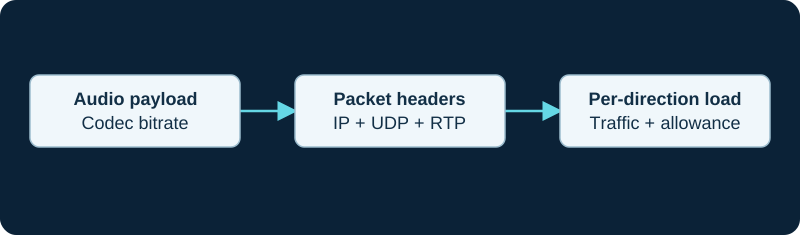
The calculator estimates IP-layer traffic in each direction. Link framing, tunnels, SRTP and unrelated traffic are outside this model.
Add packet overhead
With a 20 ms packet duration, 50 packets are sent each second. At 160 payload bytes plus 40 bytes of IPv4, UDP and basic RTP headers, the IP-layer estimate is 80 kbit/s in each direction for one stream. Link-layer and other encapsulation costs are additional.
Understand the practical tradeoff
G.711 can simplify compatibility with many calling paths, but it is not a wideband codec and its payload rate is higher than some compressed speech options. Choosing it does not correct packet loss, bad routing or an overloaded WAN.
Validate the actual media
Inspect the offer and answer, then confirm packets arrive on the negotiated ports. If the audio path includes transcoding, compare the codecs on both legs. Use SIP 488 for a rejected media offer and no audio when signaling completes but sound does not. Keep bandwidth planning separate from codec troubleshooting.
Sources & applicability
Primary references for the technical details above. Operational examples and planning checklists are VoIP.info editorial guidance.