Confirm that the call was answered
A ringing indication or progress announcement is not the same as an established call. Identify the final signaling result, then confirm whether both participants have silence after answer. Ask whether the problem affects handset, speakerphone and headset equally.
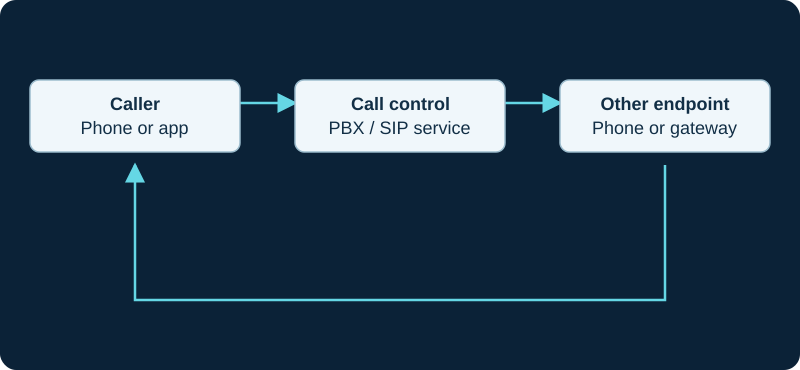
Illustrative topology: direct RTP is shown below. Many PBXs and session border controllers anchor media instead.
Isolate endpoints first
Check mute, output selection and microphone permissions for softphones. Compare another endpoint on the same network and an internal call. If one headset fails while the handset works, changing carrier codecs is unlikely to help.
Inspect negotiation and delivery
Compare the accepted codec, media-security policy and SDP destinations. Look for RTP or SRTP on both relevant interfaces. Packets that reach the device with an incompatible security context require a different investigation from packets blocked before reaching the PBX.
On a PBX relaying media, examine both legs. An incoming stream at the carrier interface is not proof it was forwarded to the extension. Review recent firewall, VPN or direct-media changes.
Avoid a false success
Do not turn off encryption or the firewall permanently to produce sound. Correct the mismatched setting and repeat incoming, outgoing and transferred calls under the intended policy. Record which boundary was responsible so later network changes can be reviewed against it.
Sources & applicability
Primary references for the technical details above. Operational examples and planning checklists are VoIP.info editorial guidance.
- IETF RFC 3261 — SIP, including linked updates ↗
- IETF RFC 3550 — RTP and RTCP ↗
- Asterisk res_pjsip configuration ↗
Examples require adaptation to your topology. No live PBX or hardware testing is claimed.