A category and a protocol
VoIP is the broader idea of carrying voice across IP networks. SIP is a signaling protocol used by many VoIP systems to locate participants and manage sessions. They are not competing products. A business can use a SIP-based VoIP phone without ever editing a SIP message.
SIP is also used for sessions beyond a simple audio call. Conversely, not every internet-calling application exposes SIP accounts or accepts a generic SIP handset. An application's ability to make voice calls does not establish interoperability with your PBX.
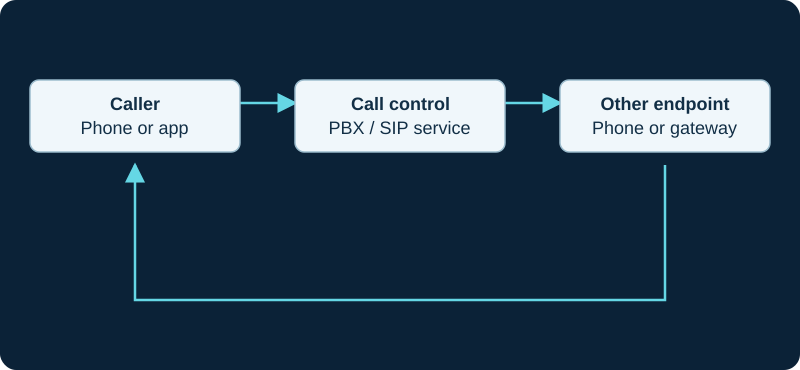
Illustrative topology: direct RTP is shown below. Many PBXs and session border controllers anchor media instead.
What SIP does not supply
SIP does not by itself provide a telephone number, a paid calling plan, network capacity or guaranteed sound quality. Session descriptions commonly convey media addresses and codec choices, while RTP transports the audio. These layers explain why successful signaling does not prove that sound will work in both directions.
A SIP trunk is a carrier interconnection using SIP. A SIP phone is an endpoint capable of participating in SIP signaling. A hosted phone service may include both an endpoint experience and the PBX features that a raw trunk leaves you to supply.
Questions that prevent incompatible purchases
Ask a handset seller whether the exact firmware supports open SIP registration, whether the device is locked to a service and how configuration is provisioned. Ask a carrier whether its offering is a trunk for your PBX or a complete hosted user service.
For interoperability, verify transport, authentication, codec and DTMF requirements. A shared acronym on two product pages is not a compatibility certification. Plan a limited acceptance test before provisioning an entire office.
Where to go deeper
Read how VoIP works for the separation between control and audio. The SIP reference develops the protocol side; the PBX overview explains the business call-control role.
Sources & applicability
Primary references for the technical details above. Operational examples and planning checklists are VoIP.info editorial guidance.