Separate codec capability from the active call
Opus supports a range of bitrates and audio bandwidths. A phone listing Opus support does not prove that a specific call used it. Inspect the negotiated SDP and the active media path, including any PBX transcoding or provider boundary.
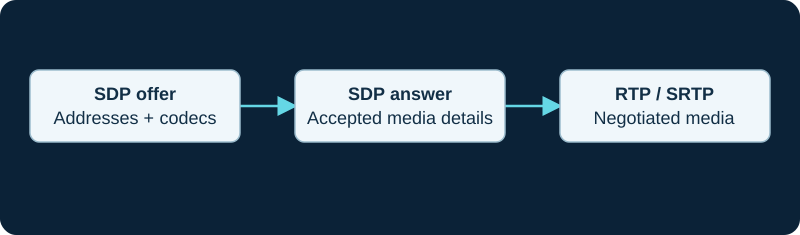
A negotiated codec does not prove packet delivery. Check both session description and actual media packets.
Plan with an explicit bitrate
For capacity planning, choose and label an assumed payload rate. Add packet headers and the number of simultaneous streams. The bandwidth calculator uses an editable scenario around a stated Opus assumption; it does not measure your encoder or enforce a codec policy.
Consider the complete path
A wideband local leg may connect to a narrower external leg. Resampling or transcoding does not recreate detail that was never present in the source. Compare the user experience on the actual destination types your business calls.
Verify compatibility before preferring it
Confirm both endpoints and intermediate systems support the negotiated payload format and parameters. Test two-way audio, hold, transfer and conference behavior. If a call fails negotiation, compare the offer and answer before removing every other codec. Retain a mutually supported fallback suited to your trunk and document where transcoding is expected.
Sources & applicability
Primary references for the technical details above. Operational examples and planning checklists are VoIP.info editorial guidance.