Control versus sound
SIP manages session signaling. RTP commonly carries the real-time audio, with timing and sequence information that helps a receiver reconstruct the stream. RTCP provides related reporting. A SIP success response and a healthy RTP stream answer different questions.
A PBX can relay both, relay signaling while allowing another media route, or terminate separate media legs. Draw the intended topology before interpreting a capture from one interface.
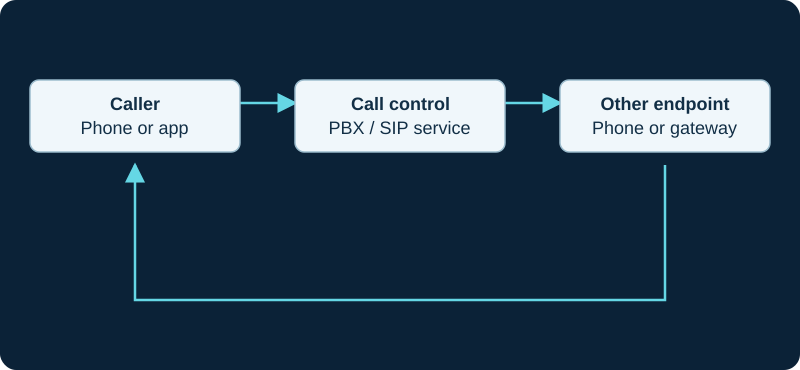
Illustrative topology: direct RTP is shown below. Many PBXs and session border controllers anchor media instead.
What a packet capture can show
A signaling trace can show offered addresses, selected media formats and the timing of call setup or teardown. A media capture can show whether packets arrive, sequence gaps and timing variation at the capture point. Neither observation automatically reveals what a person heard at the far speaker.
Encrypted media changes what you can inspect. You may still observe delivery patterns while being unable to decode audio. Do not turn off encryption across production simply to make a capture easier to read.
Localize a missing direction
Name the sender and receiver for the missing audio. Compare advertised media addresses with packet destinations, then inspect both sides of the relevant boundary. If packets arrive at the PBX but do not leave toward the phone, the investigation differs from packets that never reach the site.
Use reports with context
RTCP reception statistics can help compare call legs, but metric definitions and observation intervals matter. A clean short test during a quiet period does not validate a congested busy hour. Retain the timestamp and measurement location with every quality report.
Sources & applicability
Primary references for the technical details above. Operational examples and planning checklists are VoIP.info editorial guidance.