Separate service from platform
A trunk supplies a carrier connection; your PBX supplies internal call handling. Number ownership, concurrent capacity, calling permissions and billing should be documented independently. Start with what a SIP trunk is when these distinctions are new.
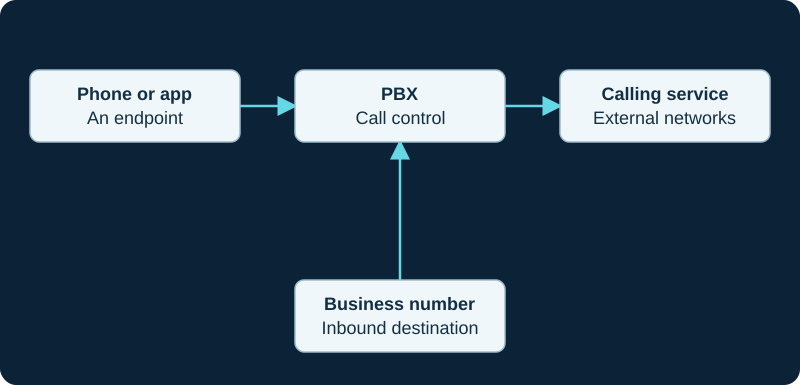
A simplified logical view. A hosted service may combine PBX and carrier functions; actual signaling and media paths can differ.
Choose a supported interconnection
Collect the carrier's current authentication, transport, number-format and media requirements. Follow the Asterisk trunk workflow or FreePBX trunk workflow for your platform. Do not treat another carrier's configuration as a universal template.
Design failure behavior
Verify incoming-number diversion separately from outbound trunk fallback. A second carrier does not remove PBX, power or network dependencies. Test the behavior under the specific failure you expect to survive.
Keep the account governable
Assign ownership for billing, spend alerts, number changes and incident escalation. Restrict expensive destinations and review authorized caller identities. Keep commercial links separate from the technical configuration record; changing an affiliate relationship should never alter factual compatibility guidance.
Sources & applicability
Primary references for the technical details above. Operational examples and planning checklists are VoIP.info editorial guidance.