A number is not a channel
A telephone number identifies a destination; a channel limit constrains simultaneous calling capacity under a service's rules. Many numbers may share one capacity pool. Extensions are another quantity entirely and should not be counted as permanently active external calls.
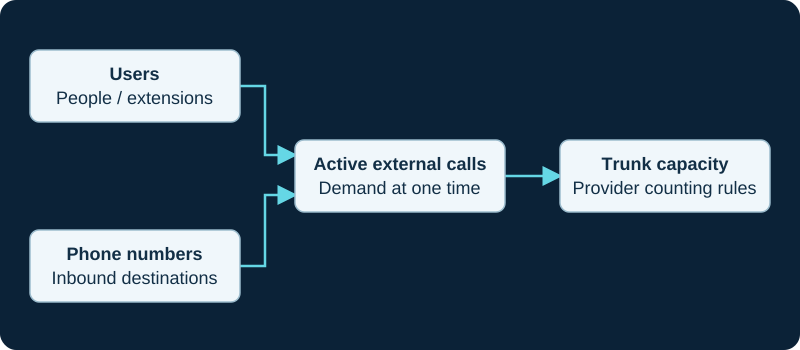
A simple staff × usage scenario is not an Erlang blocking model. Transfers and forwarding may use additional external legs.
Identify the counting model
Ask how the provider counts inbound calls, outbound calls, forwarded calls, conferences and transfers. A call forwarded through the PBX may involve more than one external leg. Confirm whether inbound and outbound limits are shared or separate.
Measure demand before expanding
Review busy-hour usage and blocked-call evidence. Separate genuine demand peaks from retries caused by a fault. The concurrency calculator provides a simple scenario estimate; it is not a queueing model that guarantees a chosen blocking probability.
Plan the full capacity chain
Check trunk limits alongside PBX resources and bandwidth. Increasing licensed channels cannot fix an overloaded uplink or a provider authentication failure. Define how callers are handled when capacity is reached: overflow, alternate destination or a clear busy response. Test the boundary with the provider through an agreed procedure and review usage after staffing or workflow changes.
Sources & applicability
Primary references for the technical details above. Operational examples and planning checklists are VoIP.info editorial guidance.