Rounded up from staff × assumed usage. This is a scenario estimate, not an Erlang blocking model or staffing forecast.
Use a scenario rather than a hidden industry ratio
Enter the number of staff making external calls and your assumed simultaneous usage. The calculator multiplies those values and rounds up to a whole call. It does not infer your business type or quietly assign a sales-office profile to a dispatch team.
For 30 staff at 25% simultaneous use, the arithmetic gives 7.5 and the result is eight calls. This is a planning scenario, not a prediction that eight channels will satisfy a particular service level.
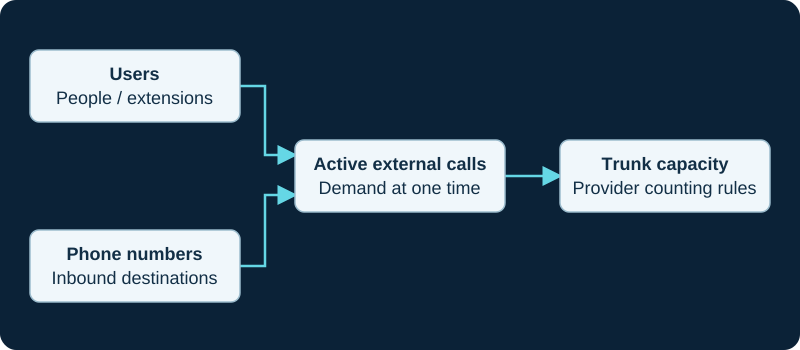
A simple staff × usage scenario is not an Erlang blocking model. Transfers and forwarding may use additional external legs.
Replace assumptions with observations
Collect busy-hour simultaneous use after a representative pilot. Include short peaks, seasonal activity and rejected attempts where measurable. A monthly average can conceal the period when callers actually encounter capacity limits.
If you need a target probability of blocking, a traffic-engineering model requires suitable offered-traffic inputs and assumptions. This simple calculator is not an Erlang model and does not supply those inputs.
Count the right resource
An internal extension call may not consume carrier capacity. External forwarding can create multiple carrier legs. Conferences, queues and transfers can use resources differently across providers and PBX designs. Check whether the contract limits incoming, outgoing or combined simultaneous activity.
A device with several line keys is not automatically entitled to that many carrier calls. Registration count is also a different measure from active conversations.
Turn the result into a test
Model a normal day, a busy interval and an outage fallback. Compare each with trunk limits and PBX workload. Retain the inputs and verify the actual call path. Use measured evidence to adjust capacity rather than treating the calculator's rounded number as a guarantee.