Uneven arrival is different from slow arrival
Jitter describes variation in packet timing at a measurement point. A stream can have steady delay with little variation, or relatively low average delay with occasional late bursts. The receiver's playout process must decide how long to wait before audio is needed.
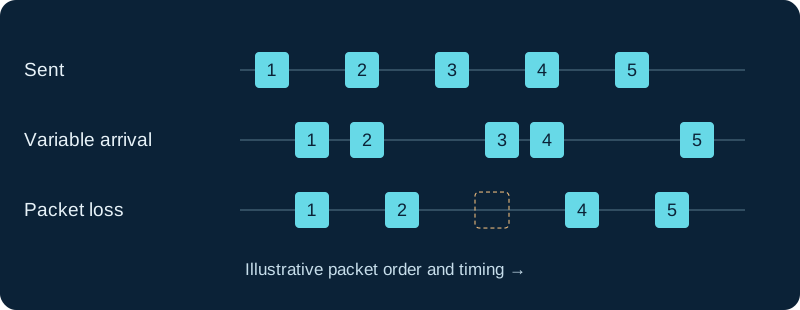
Illustration, not measured data. A jitter buffer trades playback delay against late-packet loss; it cannot recreate every missing packet.
What the buffer trades
A jitter buffer can absorb some timing variation by delaying playback. If it waits too little, late packets may miss their playout deadline. If it waits too much, conversation feels delayed. Adaptive behavior depends on the endpoint and implementation.
Find the source of variation
Compare affected and unaffected directions and check whether the symptom appears under uploads, wireless contention or a particular route. Preserve the measurement location and interval. An RTCP statistic from one receiver is not a universal summary of the entire call.
Validate perceptually
After improving queueing or adjusting a supported buffer setting, test both sound continuity and conversational delay. Do not maximize the buffer by default. Include busy-hour calls and hold/transfer paths that may negotiate different media handling.
Watch the explanation
Explains why an audio packet can arrive yet be discarded before playback. This distinction helps separate network loss from jitter-buffer and timing problems.
Read applicability and editorial notes →Watch this video here
Conceptual browser-media discussion from 2024. Specific receiver algorithms and statistics vary. Review used the available transcript and primary references; audio and screen readability remain unverified.

The player loads only when you choose Watch here. Playback uses YouTube’s privacy-enhanced embed; YouTube processes playback data.
Sources & applicability
Primary references for the technical details above. Operational examples and planning checklists are VoIP.info editorial guidance.