Design around caller intent
An auto attendant greets callers and directs them through choices. Begin with the most common reasons people call and the staffed destinations that can resolve them. Avoid creating options merely to mirror the internal organization chart.
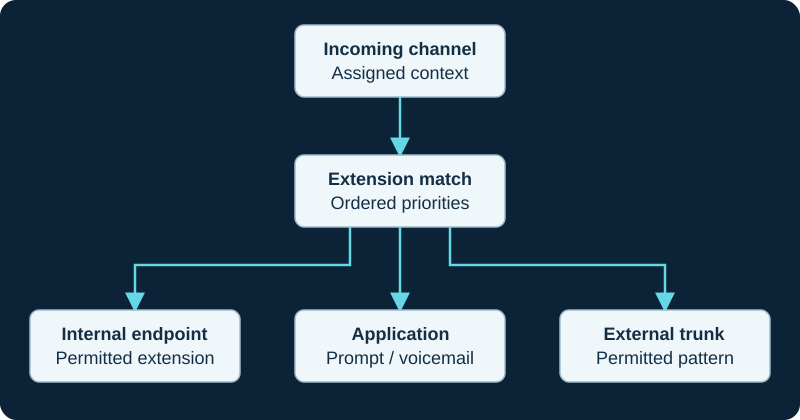
Contexts form a call-permission boundary. Keep untrusted inbound routes separate from privileged outbound patterns.
Specify every branch
Write the announcement, each key's destination, invalid-input handling, timeout and a route to human help where appropriate. Decide what happens outside business hours and when the destination is unavailable. A menu without a fallback can strand callers.
Validate the audio and digits
Use an original recording you have rights to use. Test clarity from an ordinary outside phone, including a noisy environment. Verify DTMF through the carrier and after transfer; local keypad tones do not prove the menu receives the intended events.
Keep it current
Assign an owner for department names, staffing and hours. Re-test every option after routing changes and remove stale announcements. A short menu with dependable destinations usually serves callers better than a deep hierarchy that advertises capabilities the business cannot staff.
Applying the reference
The Sangoma reference explains PBX feature concepts; some screenshots and interface instructions describe older releases. This planning guide does not rely on those screenshots as a FreePBX 17 setup procedure. Confirm the installed module and current provider feature behavior before rollout.
Sources & applicability
Primary references for the technical details above. Operational examples and planning checklists are VoIP.info editorial guidance.