Start with the interface role
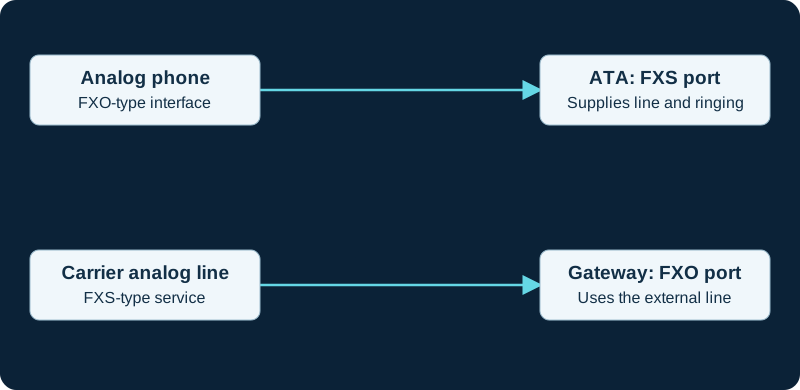
An analog telephone adapter can connect a conventional analog phone or fax machine to an IP service. A gateway can provide multiple analog ports or connect existing analog lines to a PBX. The crucial distinction is FXS versus FXO: the side supplying a telephone line interface is different from the side consuming it. A phone plug fitting a socket does not establish electrical or service compatibility. Identify the exact equipment and port role before connecting anything.
Separate voice from data applications
A working voice call is a useful first test for an ATA, but does not establish reliable fax, alarm or modem operation. Fax may use T.38 relay or G.711 passthrough, with support required along the actual path. Other legacy applications can depend on signaling and timing that an ordinary VoIP service does not preserve. Use analog-phone connection planning for a handset, analog-line gateways for a retained line and the fax troubleshooting workflow for failed documents.
Migrate by service outcome
Inventory each circuit's purpose, owner, calling destinations, power dependency and failure behavior. Pilot representative devices before moving a whole site. Test loss of mains power and network access under the equipment owner's approved procedure. For safety-related or monitored equipment, require the responsible vendor or service operator to validate the replacement path. Do not infer approval from an ATA's codec list. Keep the old service until the new arrangement has met its actual acceptance criteria and the migration owner has a recovery option.
Sources & applicability
Primary references for the technical details above. Operational examples and planning checklists are VoIP.info editorial guidance.
Examples require adaptation to your topology. No live PBX or hardware testing is claimed.