The gateway consumes the existing line
An FXO gateway connects to a line supplied by the carrier or another compatible FXS source and exposes that service to the IP PBX. Unlike a SIP trunk with flexible channel allocation, each ordinary analog line generally represents one active conversation at a time. Record which physical line maps to which gateway port and PBX route. Label the circuit's actual purpose and incoming number so a later cabling change does not silently reroute a business service.
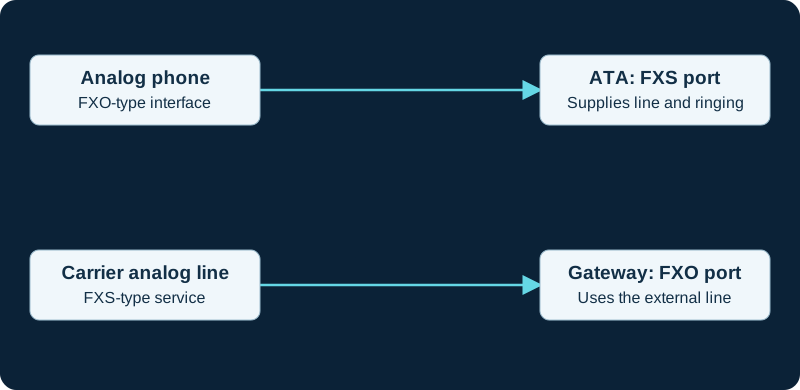
FXS supplies the line service; FXO uses it. These are two separate connection examples. Never connect two live FXS sources together.
Match supervision to the carrier
Answer detection, current disconnect, polarity reversal and disconnect-tone behavior depend on the line service and gateway. Enable only the mechanisms actually provided and supported. A mismatched polarity-reversal setting can break calls; a wrong disconnect cadence can leave a port busy after the remote party hangs up. Test both parties hanging up first, unanswered calls and busy destinations. Verify the gateway releases the line and that the PBX reports an intelligible result. Keep analog supervision evidence separate from SIP response codes generated by the gateway.
Restrict gateway calling paths
Define which PBX users may seize the line and which inbound calls may reach PBX destinations. Some adapters support direct PSTN-to-VoIP or VoIP-to-PSTN access; configure authorization deliberately so the gateway does not become an unintended calling bridge. For migration, pilot one line and preserve a direct test method for the retained service. Confirm caller-ID timing and number presentation before building exact matching rules. A correct SIP registration does not prove the analog circuit is healthy or correctly supervised.
Sources & applicability
Primary references for the technical details above. Operational examples and planning checklists are VoIP.info editorial guidance.
Examples require adaptation to your topology. No live PBX or hardware testing is claimed.