Provisioning is configuration delivery
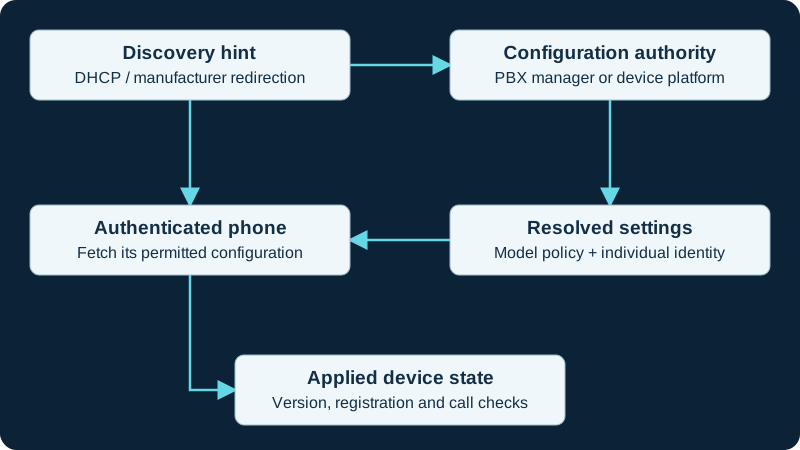
Provisioning supplies a phone with settings such as its SIP identity, server addresses, line keys, network policy and update location. Manual entry can be appropriate for a small test. Automatic delivery makes a larger estate repeatable, provided the correct device receives the correct configuration. Separate discovery of a provisioning server from authentication to it, and separate downloading a file from successfully applying its settings. A phone can fetch a configuration and still fail registration because its credentials, clock or SIP transport are wrong.
Choose one source of authority
Define which system owns device settings: a PBX endpoint manager, a manufacturer platform or your own provisioning service. Document any allowed local overrides. Competing managers can repeatedly reverse each other's changes, creating intermittent-looking faults with no network failure. Start with templates and ownership, then decide between DHCP discovery, explicit HTTPS provisioning and a manufacturer redirection service. Use the exact-model records in the phone directory to find supported deployment resources.
Pilot before broad enrollment
Use a spare device matching the target hardware and firmware. Verify discovery, certificate validation, configuration application, registration, calling and a second provisioning cycle. Confirm an unauthorized device cannot obtain another user's credentials. Record the template revision and the device's resulting state. Then expand in small groups with a recovery path for devices that lose access. A successful mass-download report is useful evidence of delivery, but the acceptance criterion is the intended phone behavior after configuration and reboot.
Watch the explanation
Maps an extension’s credentials to a phone account, then adds voicemail access and busy-lamp keys. Changing the default phone administration password is part of the walkthrough.
Read applicability and editorial notes →Watch this video here
FreePBX 15 and Yealink T58A in 2021. Use current firmware documentation for your exact model. Review used the available transcript and primary references; audio and screen readability remain unverified.

The player loads only when you choose Watch here. Playback uses YouTube’s privacy-enhanced embed; YouTube processes playback data.
Follow the stand, network cable and handset assembly before the phone retrieves its service settings. The narration starts with a phone already prepared by Accelerate Networks, making this a useful orientation for a new desk user receiving a managed handset.
Read applicability and editorial notes →Watch this video here
GRP2615 hardware with Accelerate Networks provisioning. The account and park-key configuration are supplied by the service; a retail phone needs additional setup. Review used the available transcript and primary references; audio and screen readability remain unverified.

The player loads only when you choose Watch here. Playback uses YouTube’s privacy-enhanced embed; YouTube processes playback data.
Sources & applicability
Primary references for the technical details above. Operational examples and planning checklists are VoIP.info editorial guidance.
Examples require adaptation to your topology. No live PBX or hardware testing is claimed.