A filename is not proof of identity
A predictable configuration filename or a device MAC address can identify a target file, but neither authenticates the requester. A provisioning service must enforce which authenticated device or enrollment session may retrieve which settings. Separate device-management access, configuration-download credentials and SIP account credentials where the platform supports it. Reusing one shared secret across the entire fleet increases the impact of a single exposed endpoint or file.
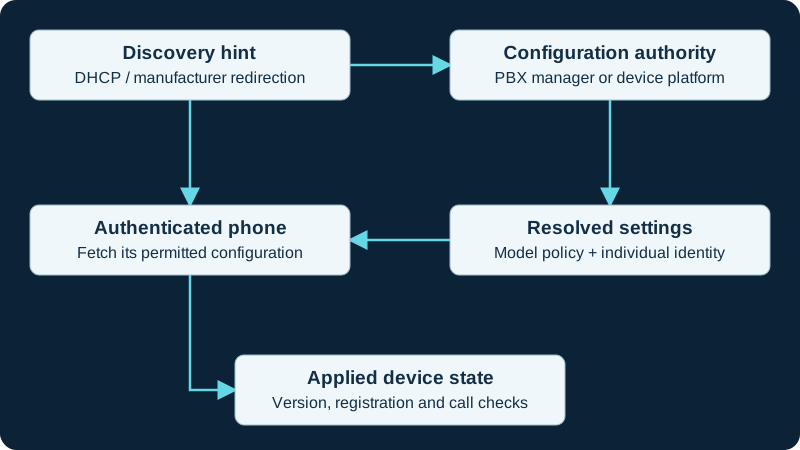
Choose one configuration owner. A discovery hint or MAC-based filename is not authentication; verify both file access and the resulting device behavior.
Control the complete secret path
Protect template inputs, generated files, server logs, backups and support exports. HTTPS protects the delivery connection when correctly validated; it does not prevent an authorized administrator or misconfigured server from exposing stored files. Review caching and error behavior with two pilot identities. Confirm that one device cannot obtain another's configuration and that failed requests do not reveal passwords in diagnostics. Avoid putting persistent secrets in query strings that can propagate into logs and screenshots.
Rotate without losing the fleet
Inventory the devices using a credential before changing it. Stage supported updates, verify a pilot's new access and registration, then revoke the old access. Define what happens to a device that was offline during rotation. For a suspected leak, also review registration and calling activity, revoke stale sessions where supported and remove exposed copies. A password change alone does not remove a downloaded configuration from an unauthorized location. Keep the incident record free of the replacement secret.
Watch the explanation
Maps an extension’s credentials to a phone account, then adds voicemail access and busy-lamp keys. Changing the default phone administration password is part of the walkthrough.
Read applicability and editorial notes →Watch this video here
FreePBX 15 and Yealink T58A in 2021. Use current firmware documentation for your exact model. Review used the available transcript and primary references; audio and screen readability remain unverified.

The player loads only when you choose Watch here. Playback uses YouTube’s privacy-enhanced embed; YouTube processes playback data.
Follow the discovery of a GRP phone, model-package preparation and assignment of a PBX extension. The example connects the PBX’s provisioning action with the phone’s registration result, making it a useful companion to understanding what automatic provisioning actually delivers.
Read applicability and editorial notes →Watch this video here
Local UCM630x Zero Config workflow with a GRP2615. This is distinct from GDMS cloud provisioning, and menu locations vary by UCM release. Review used the available transcript and primary references; audio and screen readability remain unverified.
The player loads only when you choose Watch here. Playback uses YouTube’s privacy-enhanced embed; YouTube processes playback data.
Sources & applicability
Primary references for the technical details above. Operational examples and planning checklists are VoIP.info editorial guidance.
Examples require adaptation to your topology. No live PBX or hardware testing is claimed.