Use a controlled incoming call
Call the extension internally first, then call its public route if it has one. If internal delivery fails, the carrier is not the first suspect. Note whether the PBX attempts to send an INVITE to the handset.
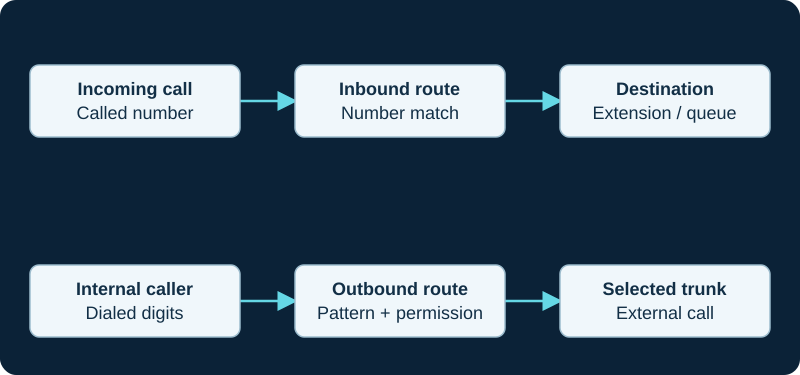
A working outbound call does not prove inbound number routing. Diagnose the direction and the matching rule independently.
Inspect the destination and contact
Verify that the extension is the actual destination after schedules, forwarding and group rules. Inspect the stored contact address and whether it reflects the current network path. A phone can send outgoing requests through NAT while an outdated contact directs incoming requests elsewhere.
Check for duplicate account use and unexpected contacts. Another device registered to the same identity can affect where a call is delivered depending on PBX policy.
Inspect handset behavior
If the INVITE reaches the phone, check do-not-disturb, local forwarding, account activation and the response it sends. A silent ringtone or headset setting can make an alerting call appear undelivered. Compare the phone's call history with the PBX record.
Confirm persistence
Repeat delivery after a handset restart and after enough time to exercise registration renewal. Test a call through the public number as well as the direct extension. Do not solve stale contacts by allowing unlimited registrations without understanding the account design.
Sources & applicability
Primary references for the technical details above. Operational examples and planning checklists are VoIP.info editorial guidance.
- IETF RFC 3261 — SIP, including linked updates ↗
- IETF RFC 3550 — RTP and RTCP ↗
- Asterisk res_pjsip configuration ↗
Examples require adaptation to your topology. No live PBX or hardware testing is claimed.