Describe the state precisely
Record the handset model, firmware, extension and displayed error without copying the secret. Check power, assigned IP address, gateway, DNS and whether the configured account is enabled. A blank account and an actively rejected REGISTER are different starting points.
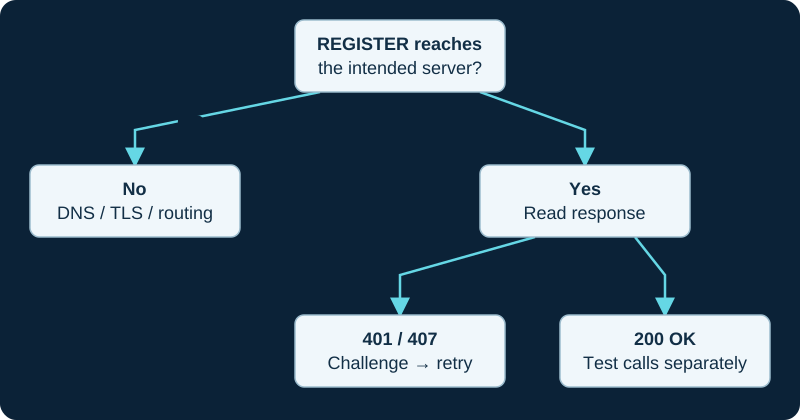
A first 401 challenge can be normal. Read the response to the authenticated retry before changing credentials.
Follow the request
If no REGISTER leaves the phone, inspect provisioning and account activation. If requests leave but no reply arrives, inspect destination resolution, transport and firewall reachability. If a reply arrives, interpret the complete challenge or rejection sequence.
Repeated 401 responses can involve an incorrect identity, secret, realm or unsupported algorithm. A single challenge followed by success is normal. Check whether earlier failures caused the device to be blocked by an intrusion-protection rule.
Inspect the PBX record
For Asterisk, confirm the endpoint, auth and AOR loaded as intended. For FreePBX, confirm the extension was submitted and configuration applied. Compare the intended account with what the handset receives from provisioning after reboot.
Acceptance
Verify the expected contact on the PBX, restart the phone and confirm renewal. Then test calls and audio separately. Do not remove authentication or reuse the administrator password as a handset secret to make the status indicator change.
Sources & applicability
Primary references for the technical details above. Operational examples and planning checklists are VoIP.info editorial guidance.
- IETF RFC 3261 — SIP, including linked updates ↗
- IETF RFC 3550 — RTP and RTCP ↗
- Asterisk res_pjsip configuration ↗
Examples require adaptation to your topology. No live PBX or hardware testing is claimed.