Find whether TLS completes
A phone cannot perform a normal SIP exchange over a TLS connection that never establishes. Separate connection refusal, handshake failure, certificate rejection and a later SIP authentication response. These outcomes require different fixes.
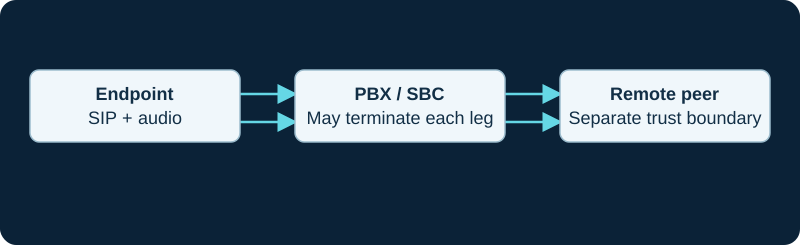
Encryption on one leg is not proof of end-to-end encryption. Review the provider boundary, certificates and media keying method.
Verify the intended server identity
Compare the configured DNS name with the certificate's valid identities and chain. Confirm accurate phone and server time. A certificate valid for a hostname does not automatically validate a connection configured by numeric IP address.
Check the phone's supported trust store, TLS versions and certificate requirements against its firmware documentation. Older hardware may lack support required by the current platform.
Inspect the correct transport
Confirm the endpoint is using the intended TLS listener and port. A UDP or plain TCP account aimed at a TLS-only listener will not be repaired by repeatedly resetting the password. Review any proxy between the phone and PBX.
Retain validation
Correct the name, chain, time or supported configuration. Do not leave certificate verification disabled as a permanent fix. Once TLS succeeds, diagnose any SIP challenge separately, then verify calls and media encryption under the intended policy.
Sources & applicability
Primary references for the technical details above. Operational examples and planning checklists are VoIP.info editorial guidance.
- IETF RFC 3261 — SIP, including linked updates ↗
- IETF RFC 3550 — RTP and RTCP ↗
- Asterisk res_pjsip configuration ↗
Examples require adaptation to your topology. No live PBX or hardware testing is claimed.