Confirm that capture starts
A calling page needs an appropriate secure context and user permission to capture a microphone. Browser permission, operating-system privacy controls and the selected physical device can each prevent capture. A headset that works in another application does not establish that this website has access to it. Check the site's permission state, the application's selected input and whether the captured track is live and enabled. Record the browser's error name rather than reducing every failure to no audio. Avoid repeatedly prompting the user without explaining which permission or device needs attention.
Follow sound in each direction
If local capture shows activity but the remote party hears nothing, inspect outgoing media counters and the remote receive path. If incoming packets arrive but the local user hears silence, inspect output selection, volume, mute and playback restrictions. A muted microphone and a muted speaker are different failures. For Bluetooth equipment, operating-system profile changes can alter input availability and sound quality. Repeat with a known wired device to isolate that boundary, then return to the intended headset. Do not conclude that the SIP codec changed merely from a change in local playback quality.
Reproduce device transitions
Test unplug/replug, switching input during a call, browser reload and operating-system sleep. Confirm that the application handles a removed device and offers a usable replacement. Device labels or identifiers can behave differently before permission is granted and across browser sessions. Keep support notes limited to the relevant device names, permission state and counters. Do not collect microphone recordings by default. Once capture and playback are established, move to WebRTC transport troubleshooting with a clear statement of which direction fails.
Watch the explanation
This walkthrough uses Jabra Direct to discover a headset and pair it with a USB Bluetooth adapter. It helps separate two tasks that are often confused: pairing the headset to the adapter and choosing that adapter as the calling application’s audio device.
Read applicability and editorial notes →Watch this video here
Shows Evolve 65 and also discusses Evolve2 65. These are different product generations; bundled adapter models and Jabra Direct screens can differ. Review used the available transcript and primary references; audio and screen readability remain unverified.
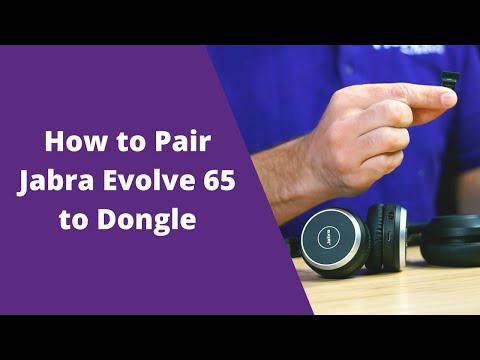
The player loads only when you choose Watch here. Playback uses YouTube’s privacy-enhanced embed; YouTube processes playback data.
The manufacturer’s captions walk through USB connection, selecting recording and playback devices, and choosing the headset in a softphone. This is a useful starting point when a wired headset is connected but calls still use the laptop microphone or speakers.
Read applicability and editorial notes →Watch this video here
USB-A and USB-C Evolve2 40 variants; software and Teams-specific controls vary by edition. Review used the available transcript and primary references; audio and screen readability remain unverified.

The player loads only when you choose Watch here. Playback uses YouTube’s privacy-enhanced embed; YouTube processes playback data.
Sources & applicability
Primary references for the technical details above. Operational examples and planning checklists are VoIP.info editorial guidance.
Examples require adaptation to your topology. No live PBX or hardware testing is claimed.