Three related capabilities
802.11k can help a client discover neighboring access points; 802.11v can provide network assistance for transition decisions; 802.11r shortens parts of the authentication process during a supported fast transition. They are complementary capabilities, not three names for the same feature. The client and infrastructure must support the chosen security and roaming combination.
An access point's feature list does not prove a specific handset will use it. Confirm the exact phone firmware, authentication mode and controller configuration. Some legacy clients require a different compatibility policy.
Walk the actual working route
Use a two-way call while walking through doors, stairwells and the edges of expected coverage. Repeat in both directions and at busy times. Record the phone's old and new BSSID, the transition time, audio gaps and whether the SIP call remains established. Compare wireless/controller events with RTP observations when available.
A roaming problem can be poor coverage, slow authentication, client stickiness or an L3 address change. Adding transmit power can worsen cell overlap and does not fix every category. A desk-bound speed test misses these transitions entirely.
Approve a handset and network combination
Define the routes, maximum acceptable conversational interruption and expected load with the people using the phones. Retest after major controller or handset firmware changes. Battery saving behavior and body placement also matter for portable devices. For a warehouse migration, compare the tested Wi-Fi solution with a suitable DECT design rather than assuming a newer Wi-Fi generation guarantees better roaming.
Watch the explanation
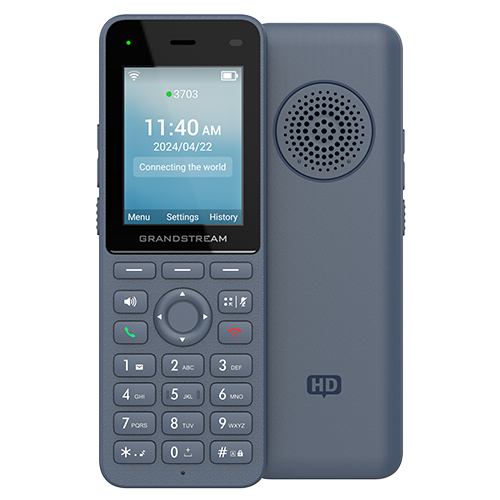
Chris compares two cordless Wi-Fi phones and describes walking a live call across his home access points. The most useful part is the reported interruption during handoffs and his explicit warning that another network may behave differently. Read the roaming guide beside it to separate coverage, registration and media continuity when designing your own acceptance test.
Read applicability and editorial notes →Watch this video here
Historical WP810/WP820 comparison. Firmware, embedded software, availability and quoted prices belong to the recording period. Review used the available transcript and primary references; audio and screen readability remain unverified.

The player loads only when you choose Watch here. Playback uses YouTube’s privacy-enhanced embed; YouTube processes playback data.
Sources & applicability
Primary references for the technical details above. Operational examples and planning checklists are VoIP.info editorial guidance.
Examples require adaptation to your topology. No live PBX or hardware testing is claimed.