Migration is a service-continuity project
Inventory the hidden dependencies
An older telephone system may serve fax machines, door entry, paging, alarms or other special devices as well as desk phones. Walk the site and record each line, number, cable path and service owner. Identify which functions can move to IP endpoints and which need a separately verified replacement service. A working voice call through an adapter does not validate every attached application.
Migration capabilities that matter
Prioritize number-porting coordination, a temporary calling plan, documented routing and a clear rollback decision. Identify whether a gateway requires FXS or FXO interfaces; the roles differ. Keep the old and new numbering plans understandable during coexistence. Pilot transfers, caller identity, fax or special-device behavior individually instead of treating all analog connections as equivalent.
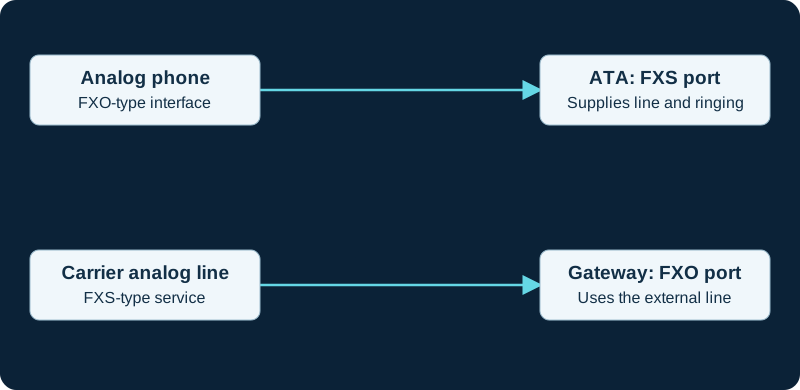
FXS supplies the line service; FXO uses it. These are two separate connection examples. Never connect two live FXS sources together.
Network and power requirements
Check whether existing cabling supports the proposed Ethernet endpoint and whether switches have sufficient PoE capacity. A telephone cable run is not automatically suitable network cabling. Plan backup power for switches, gateways, internet equipment and the PBX or relevant local components. Document the behavior when internet or mains power is lost.
Endpoints and gateways
Choose new phones for user workflows, then assess where an analog adapter or gateway is justified. Confirm the exact device model, interface type, signaling expectations and provider support. Fax and safety-related equipment need their service supplier’s compatibility guidance; do not infer approval from a generic SIP specification. Label retained circuits so future administrators can identify their purpose.
Hosted or self-hosted?
Hosted service can reduce the new PBX maintenance burden while still requiring local endpoint and gateway work. A self-hosted system can provide flexible coexistence and routing but needs a named operator. Compare migration complexity and ongoing responsibility together; an inexpensive adapter can create a long-lived support dependency.
Common mistakes and buyer questions
Do not cancel the old number service before a confirmed port and successful inbound checks. Ask who coordinates the port, which identifiers must match, what happens to bundled services and when rollback ceases to be practical. Test representative incoming and outgoing calls after cutover, then validate each special service with its responsible supplier before decommissioning the old equipment.
Use these resources next
Analog phones, gateways and fax over VoIP →Business number porting: a cutover checklist →VoIP vs traditional telephone service →Grandstream phones →PoE budget calculator →VoIP network failover →Carry your required call flow, endpoint list and support responsibilities into provider comparison. A listed provider is a research starting point; verify fit and current terms for your configuration.
Technical sources and further reading
The planning questions are VoIP.info editorial guidance. These references support the underlying technologies; capabilities and versions should be checked for your deployment.