Name the desired outcome
A router switching connections may restore new calls without preserving an active call's addresses and state. Incoming carrier diversion is another separate capability. Write an acceptance criterion for each instead of using the single word failover.
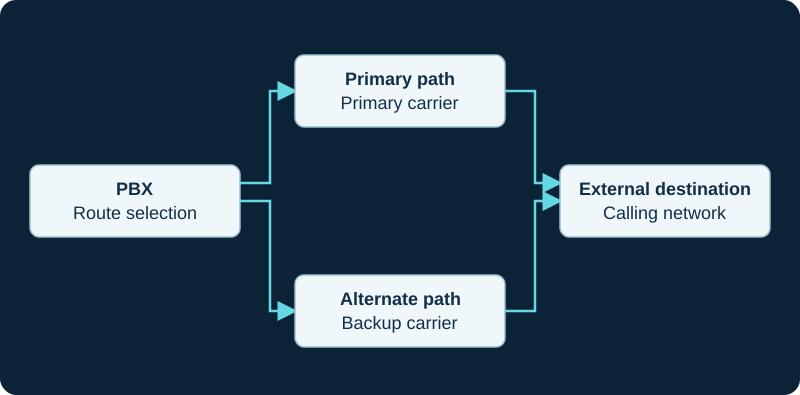
New-call recovery and active-call survival are different tests. Inbound number failover needs a provider-side routing plan.
Map shared dependencies
List power, circuits, routers, DNS, PBX and carrier delivery. Two trunks on the same failed PBX do not remove that dependency. Two access services may still share local power or physical infrastructure.
Test a bounded interruption
In a planned test, observe active calls, new outgoing calls and incoming delivery separately. Record detection time, registration recovery and manual steps. Verify carrier-side diversion when the PBX is unreachable.
Test return to normal
Failback can trigger another address or state change. Confirm routing, audio and caller identity after the preferred connection returns. Include DNS caching in recovery analysis when service discovery is involved, and keep an independent communications path for incident coordination.
Sources & applicability
Primary references for the technical details above. Operational examples and planning checklists are VoIP.info editorial guidance.