Shared administration, local accountability
Map the organization before the numbers
A shared extension plan is useful only if people can tell where a call will land. Inventory location numbers, shared departments, local opening hours and the owners of each destination. Decide which calls should stay with the branch and which should overflow to a central team. A location that closes early should not silently send callers into another branch’s closed queue.
Routing and administration requirements
Prioritize consistent extension naming, delegated administration, location-aware schedules and a directory people can actually use. Define the authority to change branch routes and keep a record of changes. Test cross-location transfers, shared voicemail and overflow when the receiving site is busy. Central management should make the operating rules easier to see, not hide responsibility behind a single login.
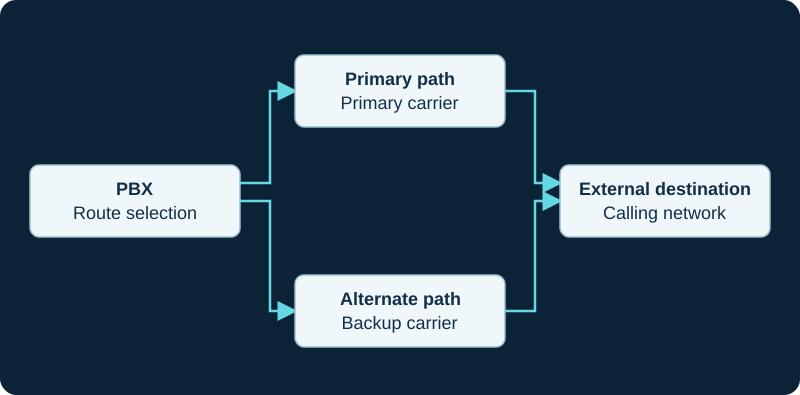
New-call recovery and active-call survival are different tests. Inbound number failover needs a provider-side routing plan.
Network and continuity requirements
Assess each site’s internet connection, switching and power separately. A healthy head office does not prove that a small branch has sufficient upload headroom or reliable PoE. Document whether a WAN or central PBX failure prevents local calls, external calls or both. Test a controlled failover scenario and distinguish recovery of new calls from survival of an existing call.
Endpoint deployment
Standardize a manageable set of supported phone and headset models where the workflows match. Record location, port, device identity and provisioning ownership. Reception desks and warehouse workers may need different endpoints even under a single provider. Confirm that replacement hardware can be provisioned at a branch without shipping it through headquarters.
Hosted or self-hosted?
Hosted administration may simplify a common directory and policy across sites. A central self-hosted system can offer routing control but concentrates operational dependence; distributed components add complexity rather than automatically providing resilience. Compare designs using their actual failure paths, operating staffing and service restoration process.
Mistakes to avoid and questions to ask
Do not reuse one location’s emergency address, time zone or caller identity across the estate. Ask how number ownership, porting batches, branch outages and local support escalation are handled. Pilot one representative busy branch and one constrained branch before migrating the rest. Keep a rollback decision point for every number-porting group.
Use these resources next
Designing phone service across multiple locations →VoIP network failover →Business hours and holiday call routing →Business number porting: a cutover checklist →VoIP bandwidth calculator →Compare provider evidence →Carry your required call flow, endpoint list and support responsibilities into provider comparison. A listed provider is a research starting point; verify fit and current terms for your configuration.
Technical sources and further reading
The planning questions are VoIP.info editorial guidance. These references support the underlying technologies; capabilities and versions should be checked for your deployment.