Capacity means more than extension count
Measure the busy interval
A large daily call total can hide short bursts that overwhelm available capacity. Gather arrivals, conversation duration, queue waiting and simultaneous calls during the busiest useful interval. Separate inbound service from outbound campaigns and internal calling. Identify whether a burst is predictable, such as an opening-time rush, or needs an explicit overflow policy.
Features and limits to verify
Ask about concurrent sessions, call-attempt rates, queue capacity and any account or trunk limits. These are different constraints. Transfers, conferences and external forwarding may create additional call legs depending on the platform. Use the provider’s definition of capacity and reconcile it with a representative call trace rather than assuming one employee always consumes one channel.
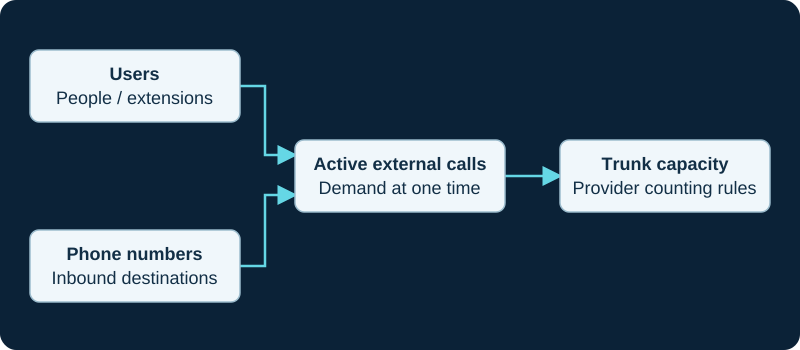
A simple staff × usage scenario is not an Erlang blocking model. Transfers and forwarding may use additional external legs.
Network requirements
Calculate media bandwidth with the selected codec, packetization and overhead, then reserve room for ordinary business traffic and growth. Inspect uplink behavior during a busy period. For self-hosted deployments, include media processing, transcoding, disk writes and database work in capacity tests. A bandwidth calculator is a planning aid, not proof that a PBX can sustain a given load.
Endpoints and working conditions
Choose endpoints that let staff handle repeated calls without losing track of held or transferred conversations. Headsets and visible controls matter more than unused feature counts. Reception and supervisors may need different layouts from ordinary agents. Test provisioning and replacement at scale so a failed endpoint does not require an improvised manual rebuild.
Hosted or self-hosted?
Hosted infrastructure moves some capacity management to the provider, but purchased limits and escalation procedures still apply. Self-hosting provides control over sizing and telemetry while requiring load validation, monitoring and recovery expertise. Compare the total operating design, including what happens during a busy-hour component failure.
Common mistakes and buyer questions
Avoid sizing only by registered extensions or treating a short successful call as a load test. Ask what throttling looks like, how overflow is billed, which alarms are available and how quickly capacity can change. Establish an evidence collection plan for a busy-hour incident and validate a safe alternate destination before it is needed.
Use these resources next
Scaling a business phone system →Extensions, phone numbers and concurrent calls →Concurrent call planning calculator →VoIP bandwidth calculator →VoIP diagnostics: collect evidence that answers a question →Compare provider evidence →Carry your required call flow, endpoint list and support responsibilities into provider comparison. A listed provider is a research starting point; verify fit and current terms for your configuration.
Technical sources and further reading
The planning questions are VoIP.info editorial guidance. These references support the underlying technologies; capabilities and versions should be checked for your deployment.