Delay changes the conversation
Latency becomes noticeable when people interrupt each other or wait for responses. The delay experienced by a listener includes more than network travel: packetization, codec processing, jitter buffering and audio hardware also contribute.
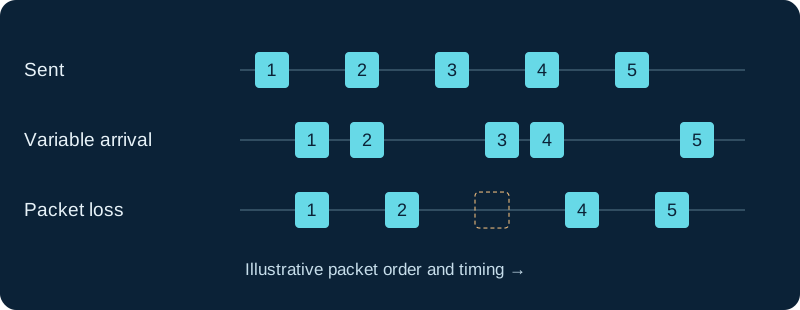
Illustration, not measured data. A jitter buffer trades playback delay against late-packet loss; it cannot recreate every missing packet.
Measure the relevant path
A ping round trip to an unrelated website is not a measurement of one-way mouth-to-ear delay. Use the actual media endpoints where possible and note whether clocks are synchronized. Compare the same path while idle and during a busy period.
Identify the variable component
Delay that rises during uploads points toward queueing. A consistently long path may reflect geography or routing. A larger jitter buffer can reduce late-packet loss while adding playback delay. Treat these as tradeoffs rather than searching for one universal setting.
If the problem is missing syllables instead of conversational lag, start with packet loss and jitter.
Validate a change with callers
Repeat a structured conversation over the same route and capture both network and user observations. Check that reducing buffering did not increase audible dropouts. Document packet duration and codec so comparisons remain meaningful. A lower speed-test latency alone is not enough to declare the voice problem solved.
Sources & applicability
Primary references for the technical details above. Operational examples and planning checklists are VoIP.info editorial guidance.