Loss has a location and pattern
Packet loss means expected packets were not observed at the measurement point. A receiver may infer gaps from RTP sequence information, but captures can also miss packets if the capture system itself is overloaded. Verify the measurement before assigning a network fault.
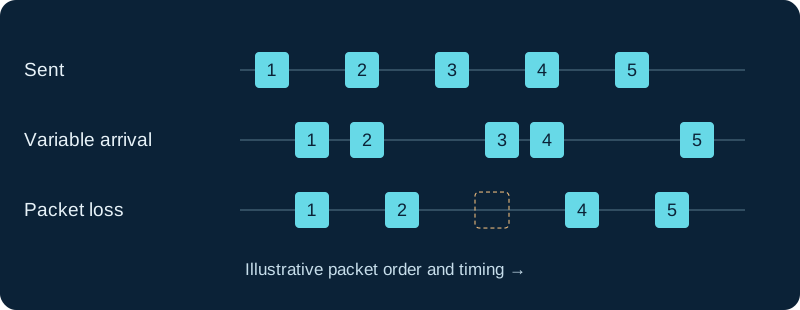
Illustration, not measured data. A jitter buffer trades playback delay against late-packet loss; it cannot recreate every missing packet.
Bursts matter
The same average loss percentage can sound different depending on whether losses are isolated or consecutive. Codec concealment and buffering influence what the listener hears. Avoid treating a single universal percentage as a guarantee of acceptable speech.
Follow the boundary
Compare sender, PBX and receiver observations when available. Check interface errors, queue drops, wireless retries and congestion around the incident. A clean local link does not rule out loss on the carrier-facing path.
Confirm the repair under load
Repeat a representative call after the justified network or device change. Retain time, direction, codec and measurement point with the result. Do not compensate for persistent packet drops by changing unrelated SIP registration timers.
Watch the explanation
Compares an intact RTP capture with a copy containing deliberately removed packets. The stream list and detailed analysis show how gaps become loss indicators and how burst patterns differ from scattered loss.
Read applicability and editorial notes →Watch this video here
A 2024 Wireshark demonstration; menu placement can change. The second capture is a teaching fixture with simulated loss. Review used the available transcript and primary references; audio and screen readability remain unverified.

The player loads only when you choose Watch here. Playback uses YouTube’s privacy-enhanced embed; YouTube processes playback data.
Sources & applicability
Primary references for the technical details above. Operational examples and planning checklists are VoIP.info editorial guidance.