Delay under load
Large unmanaged queues can hold traffic long enough to create noticeable delay. Callers may talk over each other while a throughput test still reports good speed. Compare delay during a controlled busy period with delay when the link is idle.
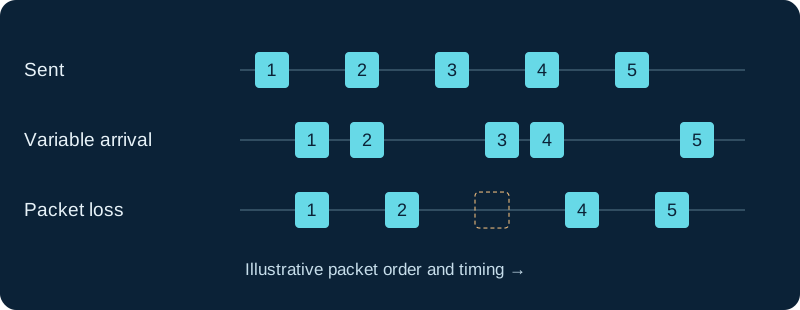
Illustration, not measured data. A jitter buffer trades playback delay against late-packet loss; it cannot recreate every missing packet.
Locate the bottleneck
Determine which egress link is congested and whether the router controls that queue. Queue management on a different interface may leave the actual bottleneck untouched. Check upstream and downstream separately on asymmetric connections.
Use supported queue management
Active queue management and appropriate shaping can help control queue growth. Follow maintained router guidance and account for varying access-link rates. Do not copy a bandwidth setting from another customer's connection or assume advertised throughput is always available.
Validate the trade-off
Repeat representative calls and check the effect on other critical traffic. A policy that protects one call by starving business applications is incomplete. Keep the shaping and classification assumptions documented so a future circuit upgrade does not leave an obsolete limit in place.
Sources & applicability
Primary references for the technical details above. Operational examples and planning checklists are VoIP.info editorial guidance.