Start with exposure and authority
List every listening service and who actually needs to reach it. Management, SIP signaling, media and application interfaces have different audiences. Restrict management to a controlled administrative path and avoid publishing unrelated services with a broad firewall rule.
Use individual administrative identities where the surrounding platform supports them. Keep handset, trunk and management credentials distinct. A compromised extension should not reveal the credentials used to administer or restore the PBX.
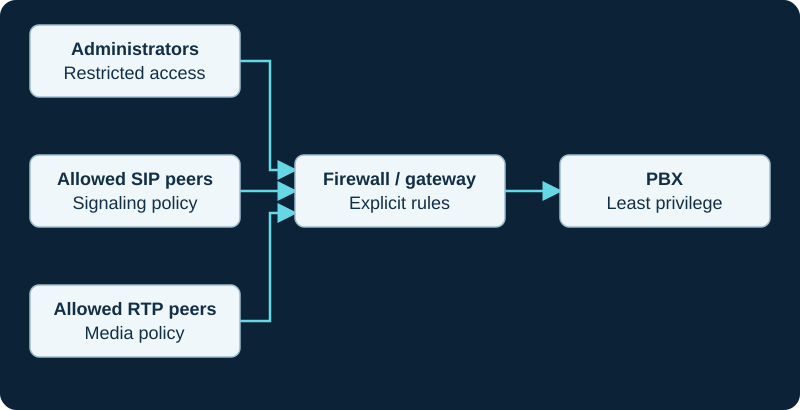
Example defensive architecture. Source restrictions, authentication, update policy and call permissions work together.
Review the dialplan as a permission system
Check where calls enter and what each context can reach, including included contexts. Carrier-originated traffic should only access intended inbound destinations. Internal users should receive the minimum external calling permissions needed for their role.
Before activating a trunk, test both allowed and denied destinations. Arrange carrier-side spend monitoring or limits where available. These controls reduce financial exposure if a local permission mistake or credential compromise occurs.
Harden the operating workflow
Track Asterisk and operating-system maintenance. Restrict access to configuration, logs, recordings and backups. Remove unnecessary modules and integrations through a documented change process, with awareness that disabling a dependency can interrupt features.
Treat TLS and SRTP as components of a security design, not a label proving complete end-to-end protection. Verify the actual negotiated paths and the behavior of intermediaries.
Rehearse an incident
Write down how to constrain an affected extension, suspend carrier calling and preserve evidence. Keep an alternative communications channel for the response team. Restore exercises should run in isolation so copied credentials cannot create competing registrations. Record what was recovered and what still requires manual reconfiguration.
Sources & applicability
Primary references for the technical details above. Operational examples and planning checklists are VoIP.info editorial guidance.
- Asterisk: contexts, extensions and priorities ↗
- Asterisk res_pjsip configuration ↗
- Asterisk: building and installing ↗
Examples require adaptation to your topology. No live PBX or hardware testing is claimed.