Make routine changes easy to own
Define what “simple” means
A manageable phone system lets the responsible person add a user, change opening hours, recover access and route a missed call without an improvised support project. List those routine tasks and how often they occur. Include the owner’s absence: a service is not simple if only one person knows where the number, password or billing account lives.
Features that matter
Prioritize a clear user directory, shared answering, voicemail ownership, schedules and predictable transfer behavior. Demonstrate administrative roles and account recovery alongside calling. Keep optional features separate from the basic configuration so a small team is not asked to manage queues, integrations or recording it does not need. A short documented call flow is easier to maintain than a long menu.
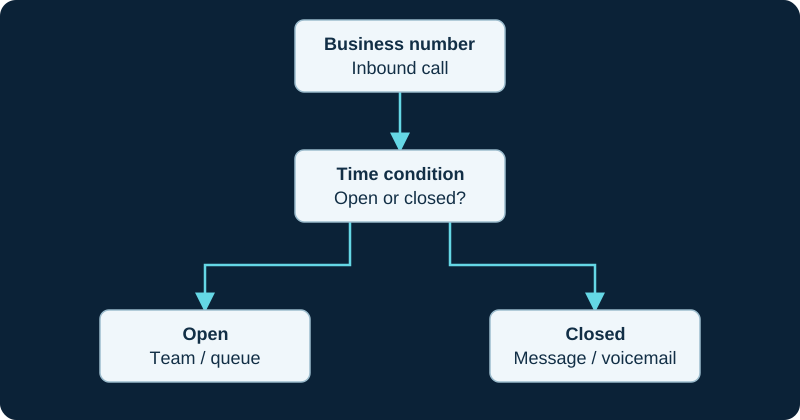
Include holidays, timezone and a manual override in the operating plan. Test both branches and the transition between them.
Network requirements
Provider-managed infrastructure still depends on the organization’s connection, Wi-Fi, switching and power. Check a representative working period and define a fallback answering route. Ensure somebody can identify the router, internet account and relevant support contacts. Distinguish a provider outage from one phone, one office or one home worker losing connectivity.
Endpoints and onboarding
Use a small set of explicitly supported phones or clients. Ask what arrives preconfigured, how a replacement is assigned and what the user must do on first login. Test a headset and ordinary transfer workflow before a broad rollout. Record the device-to-user mapping and reclaim accounts when people leave so the directory and monthly bill remain accurate.
Hosted versus self-hosted responsibility
Hosted service moves PBX infrastructure operations to the provider, but number ownership, access permissions and local devices still need attention. Self-hosting usually adds work that conflicts with a minimal-administration goal unless a trusted operator provides it as a managed service. Compare the practical support boundary and escalation process, not only who owns the server.
Mistakes and buyer questions
Avoid selecting the lowest advertised subscription without documenting taxes, optional services, required hardware, support and contract terms. Ask a provider to demonstrate adding and removing a user, changing a holiday schedule and recovering an administrator account. Confirm number-porting and exit procedures before migrating. Keep at least two authorized people able to access the administration and billing records.
Use these resources next
Small-business planning →Ring groups: shared answering without a waiting queue →Business hours and holiday call routing →Business voicemail: ownership and recovery →Browse researched providers →Hosted vs self-hosted VoIP cost calculator →Carry your required call flow, endpoint list and support responsibilities into provider comparison. A listed provider is a research starting point; verify fit and current terms for your configuration.
Technical sources and further reading
The planning questions are VoIP.info editorial guidance. These references support the underlying technologies; capabilities and versions should be checked for your deployment.