Count the connected devices
Inventory phones, computers behind phone passthrough ports, access points and other powered devices. Count ports and power separately. A switch with enough sockets may still have an insufficient PoE budget when every phone restarts together.
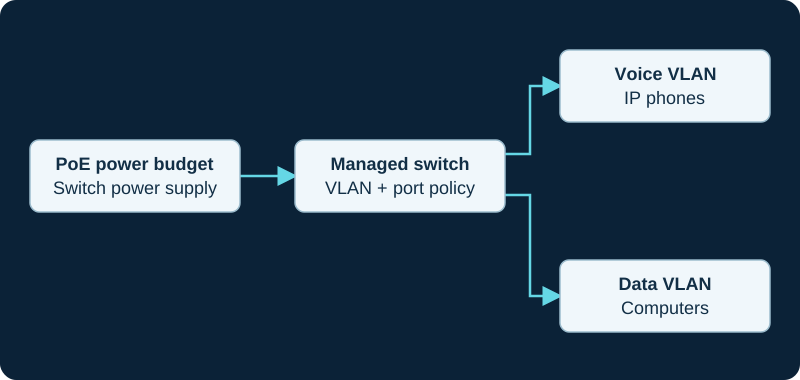
VLANs separate traffic; they do not encrypt it. PoE capacity must cover all powered devices and their per-port requirements.
Match features to the topology
A managed deployment may need voice VLANs, traffic classification and useful error counters. Confirm how phones learn their VLAN and whether the computer port remains on the intended data network. Test a spare phone before changing access-port settings across a floor.
Inspect the uplink
Aggregate traffic converges on uplinks. A fast port at the desk does not remove congestion elsewhere. Review uplink utilization, errors and queue drops during a bad call, and distinguish local switching faults from WAN congestion.
Use the PoE calculator with manufacturer allocation values rather than an assumed idle power draw.
Design the failure boundary
A failed switch or its power supply can disconnect an entire team. Decide whether critical desks need a different switch or alternate calling path. Back up the switch configuration, label ports and document management access. A replacement device is useful only if another administrator can restore the intended VLAN and power behavior.
Sources & applicability
Primary references for the technical details above. Operational examples and planning checklists are VoIP.info editorial guidance.