Can I use SIP for WebRTC signaling?
Tsahi Levent-Levi ↗Concepts still applicableAnswers one common question quickly: WebRTC does not choose your application signaling, and browser-based SIP uses a browser-compatible transport such as WebSocket.
Selected video explanations, paired with the written guides and version notes that help you put them to use.
6 videos · Showing 1–6
Answers one common question quickly: WebRTC does not choose your application signaling, and browser-based SIP uses a browser-compatible transport such as WebSocket.
Compares a STUN lookup warning with a TURN authentication failure. The useful question is whether the expected candidates were gathered, not whether the console contains any error.
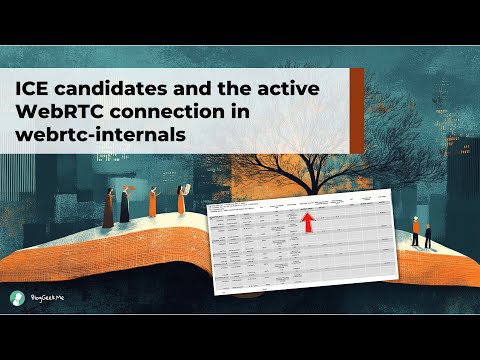
Follows candidate pairs in a live browser session, then finds the same selected pair in an exported diagnostic dump. This connects ICE terminology to an actual troubleshooting workflow.
Uses the timing of candidate discovery to explain why trickling candidates can shorten connection setup. A short alternative to the longer ICE API walkthrough.
Tsahi Levent-Levi and Philipp Hancke connect host, server-reflexive and relay candidates to the browser events that expose them. The narrated example distinguishes gathering from signaling.
Explains why an audio packet can arrive yet be discarded before playback. This distinction helps separate network loss from jitter-buffer and timing problems.
Read the applicability note before following a configuration walkthrough. Older interfaces can still teach useful concepts; the written guides provide our current software baseline. Videos remain on the creator’s channel, and you can open them directly on YouTube.
Selection notes are based on the complete available transcript and checks against primary documentation. Audio and screen readability have not yet been independently verified. Chapter timestamps are included only when verified.
Selections are editorial. A creator may promote their own services or affiliate links; that does not establish a relationship with VoIP.info.
Some popular explanations need a closer look. These reviews distinguish useful ideas from claims that the protocol does not support.